Deputy Director of Traffic at the Ministry of Interior and Transport: All reservations and observations will be taken into consideration – Algerian Al-Hiwar newspaper

Hassiba Qawasmiyeh, Deputy Director of Road Traffic at the Ministry of Interior, Local Communities and Transport, confirmed that the draft traffic law is still under study and has taken its “legislative course” and that “all observations and reservations” were raised only about some of its articles that may have had “ambiguity or lack of clarification,” pointing out that all of them “will be taken into consideration,” and all of them will be taken care of according to the applicable legal procedures.
She added that the new draft traffic law was an inevitable response to the alarming increase in the number of traffic accidents recorded in Algeria, which during the last ten months of the year 2025 resulted in more than 31,000 injuries and more than 3,000 deaths, noting that deterrence is not an end in itself, but rather a means to correct the behavior of violating drivers.
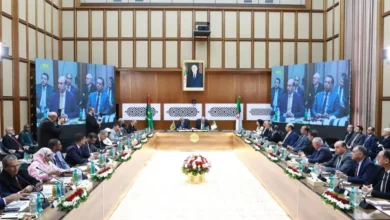
Qawasmiya explained, when she was hosted, yesterday, on the “Morning Guest” program of the First Radio Channel, that the current version of the draft law, which is currently presented for discussion at the level of the National Assembly after its approval by the representatives of the National People’s Assembly, is the result of participatory work that brought together the various sectors and bodies concerned with traffic safety, such as the interests of the National Gendarmerie, the National Security, and the Justice Sector, each in its field of competence, with the aim of enriching the text and making it more realistic and effective.
The Deputy Director of Road Traffic at the Ministry of Interior and Transport added, “The national traffic safety policy is based on several axes, including traffic education, sensitization and awareness, and training, all the way to a legal deterrence system,” stressing that the goal is to build an integrated legal framework that contributes to the prevention of traffic accidents and ensuring safer roads.
She continued, “A multi-sectoral ministerial working committee contributed to preparing the text, based on field experiences and daily experience of the traffic reality, in order to address road accidents by all possible legal and technical means.”
An integrated system of prevention and deterrence
The same spokeswoman also explained that the new draft law aims to impose respect for traffic rules by road users, and to enhance traffic safety by including training as a priority, and adopting digital systems in collecting, studying and analyzing data, within a comprehensive vision that combines prevention, awareness-raising, and digitization.
In her response to the controversy surrounding some of the project’s provisions on social media, Qawasmiyeh explained that the text includes 190 articles distributed over several sections, related to traffic rules, conditions for obtaining a driver’s license, professional driving, administrative and technical conditions for vehicles, in addition to inspection procedures and deterrence provisions.
She stressed that deterrence is not an end in itself, but rather a means to correct the behavior of violating drivers, noting that violations are classified into four levels, from a minor violation to a misdemeanor and then a felony, according to the degree of severity, and may include arbitrary or financial fines, especially in serious cases such as causing injuries or accidental killing, especially when driving under the influence of alcohol or drugs.
Expanding responsibility and protecting road users
The spokeswoman revealed that the draft law expanded the circle of legal responsibility to include all those involved in accidents, in response to the directives of the President of the Republic, including those charged with constructing and maintaining roads, and driving schools proven to be involved in granting driving licenses in illegal ways, as civil and criminal prosecutions could result from that. The project also stipulates prohibiting the transportation of children under the age of 8 on mobile bicycles, and classifying this as a traffic violation, within the framework of protecting children and ensuring the safety of road users.
Regarding throwing waste from vehicles, the project classified it as uncivilized behavior of the second degree, and proposed a fine of 5,000 dinars, given the danger this behavior poses to traffic safety and distracts drivers.
Audio-visual devices and road maintenance
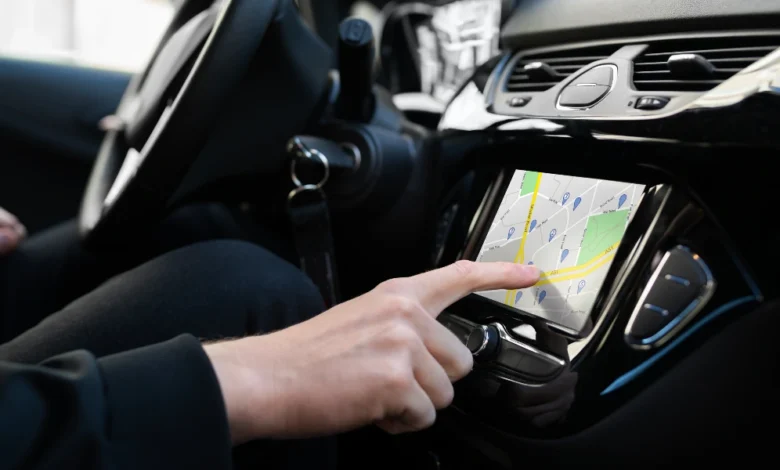
Qawasmiyeh explained that the use of a phone and audio-visual devices while driving is classified as a fourth-degree violation, due to the distraction it causes. She stressed, on the other hand, that the project did not prohibit the use of the Global Positioning System (GPS), as it is a guidance tool that falls within the spirit of traffic safety.
Road maintenance is a state duty
The draft law also holds the state, local groups, and relevant sectors, especially the public works sector, responsible for maintaining roads and ensuring their readiness, as Article 46 stipulates the necessity of completing the works in accordance with a book of conditions and technical standards that guarantee the safety of citizens.
The text also touched on the need to update traffic lights, improve public lighting, and remove non-compliant time limits, as they cause accidents and material damage.
#Deputy #Director #Traffic #Ministry #Interior #Transport #reservations #observations #consideration #Algerian #AlHiwar #newspaper
#oussama_boulegheb #elhiwardz #alakhibariat.xyz #elhiwar #elhiwar-en