Nearly two million Algerians live in a harsh health situation due to their infection with rare diseases, equivalent to 4.5% of the total population. This high percentage places Algeria facing a major health, economic and social challenge, especially in light of a health system that struggles to keep pace with modern therapeutic and diagnostic developments.
Globally, about 7,000 rare diseases have been diagnosed, affecting 300 million people across the world, making this category of diseases a public health issue no less important than known epidemics, and requiring an urgent and coordinated response at the national and international levels.
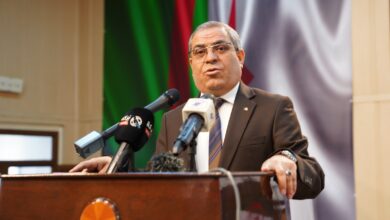
In an exceptional media day organized by “NHS MediaCom” in cooperation with “Novuspharm” laboratories, an elite group of Algerian experts and doctors gathered to present a comprehensive and detailed picture of the reality of rare diseases in Algeria. Professor Ezzedine Mekki, former head of the Pediatrics Department at Nafisa Hammoud University Hospital, Professor Farid Haddoum, head of the Nephrology Department at Mustafa Pasha University Hospital, and Professor Salim Nakal, head of the Hematology Department at Essaad Hospital, presented the presentation. Hosni Jamaei in Beni Messous, provided rich and in-depth interventions on various aspects of this complex health problem.
Consanguineous marriage…the main reason behind the spread of genetic diseases
Professor Mekki began his intervention with an overview of rare diseases in Algeria, focusing in particular on the phenomenon of consanguineous marriage, which amounts to 23% according to the National Bureau of Statistics. This high percentage largely explains the spread of genetic diseases in Algerian society, as Mekki confirmed that 80% of rare diseases are of hereditary origin.
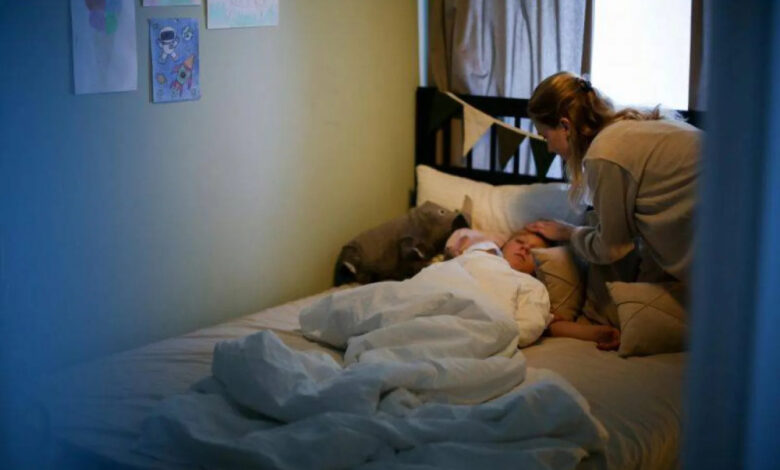
The doctor explained that pediatricians constitute the first and most important line in the early diagnosis process, given that 75% of the symptoms of rare diseases appear before the age of two years, that is, in infants. What is more dangerous is that 35% of these diseases are fatal before the child reaches his first year, while 25% of them lead to severe disability that affects the quality of life of the child and his family throughout his life.
Makki revealed a shocking fact: Only 4% of rare diseases have had a treatment developed, which means that the vast majority of these diseases are classified as “orphan diseases,” that is, diseases for which no specific treatments are available, which puts patients and their families in direct confrontation with the unknown and daily pain.
Real-life examples of rare diseases spread in Algeria
Professor Al-Jazairi provided specific examples of the most famous rare diseases spread in Algeria, including cystic fibrosis, a hereditary disease that affects the respiratory and digestive systems, hemophilia, which affects blood clotting, dry pigmented skin, or what is known as “moon children,” hereditary osteoporosis, which affects bone formation, and primary immunodeficiency disorders that affect the immune system, making those affected vulnerable to recurrent and dangerous infections.
Diagnosis…a long journey of suffering and wandering
Algerian Professor Farid Haddoum addressed one of the biggest challenges facing patients and their doctors: the difficulty and complexity of diagnosis. He stressed that genetic exploration, which is the most accurate means of diagnosing rare diseases, is still not sufficiently available in Algeria, explaining that Algerian doctors currently rely mainly on three types of examinations: clinical, chemical and histological.
As a result of this deficiency, patients suffer from what is known as “diagnostic wandering” or “long diagnostic journey,” as years may pass before the Algerian patient receives a correct diagnosis, and during this period the patient may receive incorrect or inappropriate treatments, forcing many well-off families to travel abroad to seek diagnosis and treatment, explaining that prenatal diagnosis is now becoming available in Algeria.
Important organizational achievements despite huge financial challenges
Professor Salim Nakal moved on to talk about the regulatory and legislative achievements that Algeria has achieved in recent years, the most prominent of these achievements being the expansion of the list of officially recognized rare diseases from only 32 diseases to 109 diseases, according to a ministerial decree issued on November 6, 2024.
This major expansion of the list means that thousands of Algerian patients are now legally eligible to receive free treatments and comprehensive health insurance from the state. Most importantly, these treatments are provided free of charge even to patients who are not socially insured, which represents an important step towards health justice. Nakal explained that the current list does not only include 109 separate diseases, but also includes “disease groups” or “disease families,” so that each item may include 5 to 7 related diseases, which means that the actual number of recognized diseases is about 159 diseases.
Among the diseases that were absent from the first list for the year 2013 and were added later: hemophilia, thalassemia, Gaucher disease and other rare diseases. Professor Nakal pointed out that the first list for the year 2013 included diseases that are not considered rare in the strict sense, such as diabetes, which reflects the confusion that prevailed at the time in determining the criteria for rare diseases.
45 billion dinars…a huge budget, but insufficient
Nakal revealed that the government has allocated a huge budget of 45 billion Algerian dinars to deal with rare diseases during the year 2025, which reflects the authorities’ awareness of the seriousness of the situation and their commitment to improving care for this category of patients. However, Nakal warned that this budget remains insufficient to cover the real cost of innovative treatments for rare diseases, which are among the most expensive medicines in the world.
Fantastic prices for treatments…the biggest challenge
Professor Nakal gave shocking examples of the costs of treatments. One injection of gene therapy for hemophilia costs US$2.8 million. This treatment, which was developed recently, can permanently cure the patient from hemophilia B, but its astronomical price makes it out of reach for most developing countries, including Algeria. Soliris, one of the most expensive drugs in the world, is used to treat some rare blood diseases. Its annual cost per patient ranges from $500,000 to $1 million.
Professor Nakal indicated that he treated a patient from one of the major institutions with this drug, which reflects the enormous financial burdens borne by the health system. Although traditional hemophilia medications are less expensive than gene therapy, they remain expensive and require continuous use throughout life.
The national plan… great ambition and comprehensive axes
In the face of these enormous challenges, the Algerian health authorities have prepared a comprehensive national plan to deal with rare diseases, based on the United Nations resolution for the year 2021, which calls on countries to integrate rare diseases into national health policies. Given that 80% of rare diseases are hereditary and 23% of marriages in Algeria are marriages between relatives, genetic counseling becomes an urgent necessity, but activating this advice requires cooperation between different sectors, including the Ministries of Justice and Religious Affairs and Parliament, and Makki stressed that 96% of rare diseases have no cure and are fatal, making prevention through genetic counseling and avoiding consanguineous marriage a vital strategy.
Media awareness and sensitization
The stakeholders called on the media to play a greater role in raising awareness about rare diseases, and in conveying the suffering of patients and their families to public opinion and decision-makers. They also stressed the pivotal role of patient associations in improving care for rare diseases.
Encouraging national production of medicines
The stakeholders stressed the importance of developing a national pharmaceutical industry capable of producing some medicines for rare diseases locally. This would significantly reduce costs and ensure the sustainability of supply, as Professor Al-Jazairi pointed to a noticeable improvement in medical awareness of rare diseases, especially those that were almost unknown years ago.
“Novuspharm” is a model
In light of this complex context, the role of national pharmaceutical companies emerges as a decisive factor in achieving health sovereignty and reducing treatment costs. The company “Novuspharm” has become a leader in the pharmaceutical sector in Algeria, and has succeeded in achieving the localization of the production of five similar vital medicines to treat nine rare diseases.
Novuspharm operates in accordance with international quality and safety standards, ensuring that locally produced medicines meet international standards. The company aspires to expand its production scope to cover more of the needs of patients with rare diseases, and to implement an integrated industrial process that includes all stages of production.
#million #Algerians #facing #rare #diseases
#oussama_boulegheb #elhiwardz #alakhibariat.xyz #elhiwar #elhiwar-en