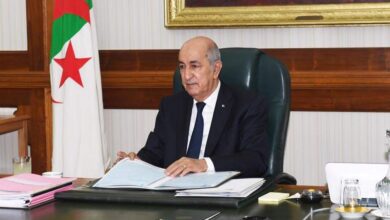
The Minister of the Interior, Local Governments and Transport, Said Saioud, confirmed on Thursday in Algiers that the text of the traffic law came in a balanced and fair form in order to serve the citizen and not punish him.
In his response to the interventions of members of the National Assembly, in a public session chaired by Azouz Nasseri, Speaker of the Assembly, Saeed affirmed that the text of the traffic law “came in a balanced and fair form, as it holds responsibility for all those involved in the traffic safety system,” stressing that “emptying the text from its deterrent side makes it lose its usefulness and makes it unable to achieve its goals.”
The Minister was also keen to clarify that the aforementioned law “does not aim to punish the driver or the citizen, but rather to establish an integrated traffic safety system that includes various stakeholders, with special importance given to awareness and prevention.”
In this context, he pointed out that the traffic law in its new form is “the result of work that lasted several years, in which a multi-sectoral team participated according to a participatory approach based on field experience and objective standards based on a diagnosis of the traffic security situation in the country.”
Regarding accidents that cause deaths, the Minister pointed out that the provisions of Article 124 of it, which relates to manslaughter resulting from traffic accidents, were “consistent with the provisions of the Penal Code, but they relied on the standard of the act, the consequences resulting from it, and the circumstances surrounding the accident within the framework of consecrating the principle of protecting lives.”
Among the main goals of the new traffic law is “unifying all provisions related to traffic, its regulation rules, and the penalties resulting from violating them in one clear legal text, with toughening of penalties in cases of driving under the influence of alcohol, drugs, or psychotropic substances,” added Saeed, who stated that this text “does not target committed professional drivers who make driving their source of livelihood and respect traffic rules.”
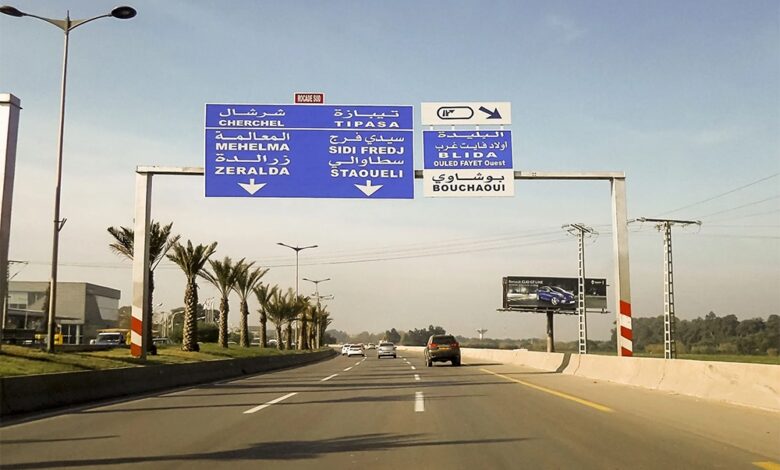
Regarding the condition of roads, this text, as he said, attaches “great importance to preparing and securing roads, while obliging the concerned bodies and institutions to install and maintain safety equipment permanently, and to remove time limits that do not conform to technical standards, which have long been the subject of complaints from citizens,” while “holding responsibility to anyone proven to have failed to do so.”
Regarding surveillance, the law includes provisions that “require roads to be equipped with surveillance cameras and the use of automated systems to inspect traffic crimes inside and outside population centers, in addition to providing security services with the necessary technical equipment.”
The intervening members of the National Assembly appreciated the content of the text of the law, proposing to move towards a “comprehensive approach that takes into account all the factors involved in this field, such as the road, the vehicle, and the driver.”
#text #traffic #law #intended #serve #citizen #punish
#oussama_boulegheb #elhiwardz #alakhibariat.xyz #elhiwar #elhiwar-en