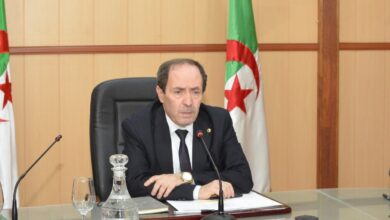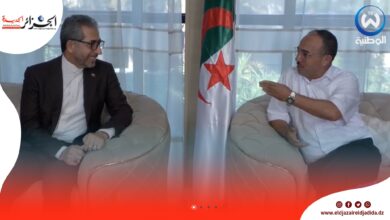
Deputy Director at the Ministry of Interior, Local Communities and Transport, Hasba Qawasmiyeh, assured that the concerns raised about the draft traffic law would be taken care of within the approved institutional frameworks. She said, “The law is still under study within the approved legislative process, and remains subject to enrichment in light of the observations and proposals presented.”
Today, as a guest on Channel 1’s “Guest of the Morning” program, the speaker said, “In recent years, Algeria has witnessed a noticeable and frightening increase in the number of traffic accidents, as it counted more than 31,000 injured and more than 3,000 dead during the last ten months of the year 2025, while the death rate on the roads exceeded 3,000,” noting that “the traffic law is considered the result of joint sectors such as The security services, the National Gendarmerie, the justice sector, and other relevant sectors because traffic safety includes many aspects.” The law was prepared according to it by a working committee composed of various sectors, and all the suggestions in the text are aimed at curbing traffic accidents.
Regarding the objectives of this project, Hasiba Qawasmiyeh says, “This text carries many objectives, foremost of which is respecting traffic rules, in addition to strengthening the traffic safety policy with all available mechanisms and digital systems.” In collecting and analyzing data.”
The official reviewed precise details of the new draft traffic law and said that it “includes 190 articles covering several sections and sections, including traffic rules, another section that includes the conditions for obtaining a driver’s license, another section related to professional driving, a section related to administrative conditions for vehicles, and also related to inspection procedures, and the last series is deterrence, which we do not view on the basis of an end in itself, but rather came as a tool and means to correct and reform the behaviors of violating drivers, and all violations are regulated by law.” “Accurately,” and with regard to cases that require deterrence, the spokeswoman indicated that “every violation requires deterrence, such as: serious transgressions, misdemeanors in the case of wounding and manslaughter, and driving under the influence of drugs and drunkenness.”
In her response to the controversy surrounding the driver being subjected to imprisonment if he causes a death, the spokeswoman responded with a question: “Can this proposal be considered logical or realistic?” She said, “The Algerian legislator never raised this point in the text of the law.” She said, “This article does not exist at all in the text of the draft.”
Expanding responsibility
The spokeswoman revealed that the draft law expanded the circle of legal responsibility to include all those involved in accidents, in response to the directives of the President of the Republic, including those charged with constructing and maintaining roads, driving schools proven to be involved in granting driving licenses illegally, technical observers, centers charged with issuing a professional competency certificate, and mining experts as they are responsible for vehicle conformity, as civil and criminal prosecutions could result from this..
The project also stipulated the prohibition of transporting children under the age of 8 on mobile bicycles, and classifying this as a traffic violation, within the framework of protecting children and ensuring the safety of road users. With regard to throwing waste from vehicles, the project classified it as uncivilized behavior of the second degree, and proposed a fine of 5,000 dinars, given the danger this behavior poses to traffic safety and distracting drivers’ attention..
The project was not blocked GPS
Qawasmiyeh explained that the use of a phone and audio-visual devices while driving is classified as a fourth-degree violation, due to the distraction it causes. She stressed, on the other hand, that the project did not prohibit the use of the Global Positioning System. (GPS)As a guidance tool that falls within the spirit of traffic safety.
Traffic lights update
The draft law also holds the state, local groups, and relevant sectors, especially the public works sector, responsible for maintaining roads and ensuring their readiness, as Article 46 stipulates the necessity of completing the works in accordance with a book of conditions and technical standards that guarantee the safety of citizens. The text also touched on the necessity of updating traffic lights, improving public lighting, and removing sidewalks that do not meet standards, due to the accidents and material damage they cause.
#traffic #law #prohibit #GPS #Algeria