Settlement of the 2023 budget… Representatives propose establishing an independent body to evaluate projects and public policies – New Algeria

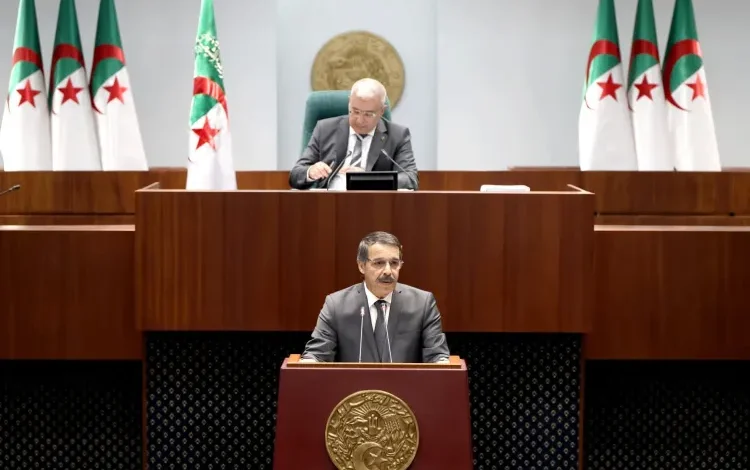
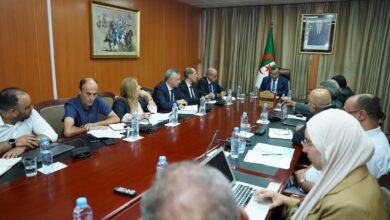
The interventions of the representatives of the lower chamber were interrupted during a discussion session Budget reconciliation bill Year 2023 in attendance Minister of Finance, Abdul Karim Balzard, and the sector’s executives, such as the Director General of Customs, Major General Abdul Hafeez Bakhoush, and the Director General of State Properties, Khadi Abdul Rahman, On one point, which is the necessity of establishing an independent body to evaluate projects and public policies, entrusted with the tasks of following up on the implementation of programs and measuring their effectiveness in a systematic manner, ensuring continuous evaluation of public spending and linking resources to field results, while adopting a forward-looking approach that takes into account the circumstances of users and managers when planning and implementing projects.
In this context, Representative Zakia Bouqtosha said, “Discussion of the budget settlement project must not be limited to numbers only, but rather the projects must be evaluated and weaknesses and defects diagnosed,” and in her intervention she went on to talk about “the great pressure that major hospitals are suffering from and the long waiting periods.” On the other hand, she raised Unemployment grant She said, “It is time to transform this grant from a temporary social measure into an actual mechanism for integration into the world of work through training and accompaniment and linking it to real employment opportunities.”
For his part, the representative of the National Liberation Front, Ahmed Rabhi, asked about “the feasibility of prosecuting the financial past and the resulting political responsibility.” In return, he stressed the need to review the financial disbursement mechanisms in the supplementary program. Especially the new states, to avoid stumbles in the current states.”
The representative for the state of Chlef, Khalifa Ben Abed, chose to review a group of projects that have not been initiated, and the representative cited as evidence the project to implement two industrial zones in which investment has not yet begun, and which are capable of operating more than 12,000 jobs in Bouqadir and Oued Silli. The speaker touched on talking about 10 tourism expansion areas for six municipalities, namely Beni Hawa, Oued Qoussine, Tenes, Sidi Abdel Rahman, La Marsa, and Dahra, as their work procedures have not been facilitated yet.
For her part, Representative Haji Fatima Al-Zahraa from the Freedom and Justice Party came forward to talk about the issue of respecting the “N-1” rule and the necessity of developing the methodology for presenting the settlement project in a manner more in line with the philosophy of organic law, through an in-depth sectoral discussion that allows for a more accurate assessment of the extent of financial efficiency.” She gave way to talking about the complexity of some public transaction procedures that may affect the rates of credit consumption, which calls for continuing administrative simplification efforts, and called for intensifying work to raise exports. Outside of fuelAnd supporting investment in various fields, while valuing the industrial real estate available in a number of states, as well as the importance of presenting the government’s work plan and the report of the Governor of the Bank of Algeria to enrich the discussion and enhance transparency.
For his part, Parliamentarian Abdel Karim Ben Khallaf criticized “the delay recorded in discussing the budget settlement law for the year 2023, which is three years late at a time when it is supposed to be a timely and effective tool for parliamentary accountability according to the rule (N-1),” stressing in the same context that “the budget reconciliation law is not just an accounting document for closing accounts, but rather a constitutional moment for exercising real oversight, evaluating public policies, and measuring the extent to which implementation conforms to the appropriations and goals approved by Parliament.”
The MP believes that “the three-year delay empties the text of its oversight spirit, and makes us discuss past numbers without the possibility of immediately holding the perpetrators accountable. Therefore, we suggest strict adherence to the rule.” N-1 “Starting next year.” Therefore, the speaker proposed programming annual sectoral evaluation sessions parallel to the Finance Law, devoted to presenting performance indicators, not just consumption rates, while obligating the ministerial sectors to submit detailed reports on the extent to which the goals set forth in government work plans have been achieved.
Among the other proposals put forward by the representative: activating the role of the Accounting Council, as we note that the Accounting Council’s reports include accurate and repeated observations about the same imbalances, without seeing clear follow-up procedures. Therefore, we propose, with the establishment of an official mechanism to follow up on the implementation of the recommendations of the Accounting Council within each ministry, along with submitting an annual report to Parliament explaining what has been implemented of those recommendations, as well as setting binding time limits for correcting the imbalances.
The representatives formulated 12 recommendations formulated in light of the results of the study of the draft budget reconciliation law for the year 2023, and an analysis of the data related to the implementation of public revenues, public burdens, and special accounts of the treasury, and the shortcomings that were recorded related to programming tools, follow-up, and adherence to the legal and regulatory framework. Among what the representatives recommended: ensuring the full and gradual implementation of the provisions of Organic Law No. 15-18 related to the amended and supplemented finance laws, especially those related to establishing the program budget by approving A unified frame of reference for preparing performance indicators that accurately defines the definition of the indicator, its calculation methodology, its data sources, and the periodicity of its evaluation, in addition to completing the dissemination of the integrated information system for budget management and accounting and ensuring its integration with sectoral management systems in a way that allows real-time tracking of obligations and orders for disbursement and collection and enhances the transparency of financial data.
They also stressed the need to strictly adhere to the provisions of Organic Law No. 18-15, especially with regard to the nature of expenditures that may be recorded in the treasury’s private accounts, and to prevent any resort to exceptional measures that affect the principle of allocating appropriations, and also to put a final end to the practices of settlements after the close of the fiscal year, and to ensure respect for the principle of the stability of the opening balance and the separation of financial cycles, while updating the accounting and budget information system to ensure reliability and transparency.
#Settlement #budget.. #Representatives #propose #establishing #independent #body #evaluate #projects #public #policies #Algeria