Mining and infrastructure projects, Algeria’s bet for economic diversification – New Algeria

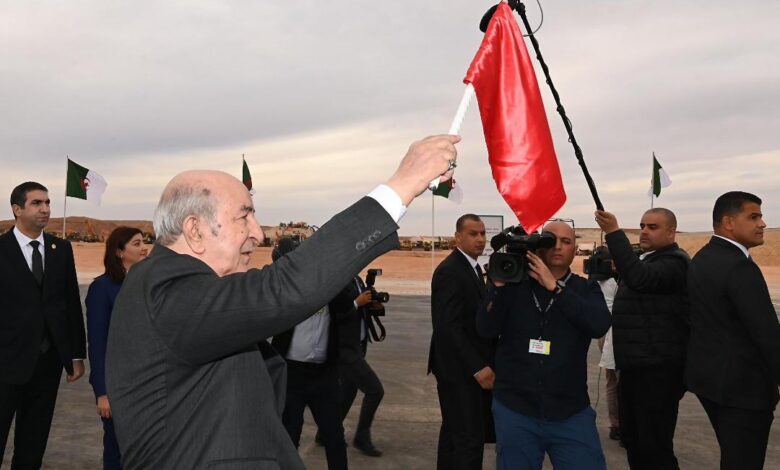
The President of the Republic presided over Abdel Majeed TebbouneThe day before yesterday, a working meeting was held devoted to monitoring the progress of major projects in the country, especially in… Mining sector And infrastructure. The meeting dealt in particular with the progress of work on the eastern mine line, the phosphate mine and its units, in addition to the zinc extraction project in Oued Amizur, in preparation for commencing the exploitation of these actual resources before the end of this month of March. The meeting also touched on the follow-up of major transport projects, including the trans-Saharan road and the line Railway Algiers – Timangset, with the aim of strengthening transportation networks and infrastructure and linking remote areas to economic centers.
Algeria pays great attention to the exploitation of various mining projects, including… Iron and steel To zinc and lead, all the way to combined phosphate and rare minerals that the country abounds with, given their prominent and effective role in advancing economic and social development, allowing for the promotion of national exports and the diversification of treasury revenues outside the country. Fuel sectorIn line with the government’s strategy and the aspirations of the President of the Republic to gradually exit dependence on oil and gas, as well as raise the volume of the gross domestic product to the level of 400 billion dollars within the next few years.
Eastern Phosphate Mine Line
Regarding the eastern mine line and mine Phosphate And its units. The Ministry of Public Works and Basic Installations has reset the completion clock in one of the heaviest structural projects in eastern Algeria, placing the delivery of the eastern Annaba-Bilad Al-Hadba phosphate mine line at the top of the executive priorities, amid strict instructions to mobilize all resources and accelerate the pace of work without margins of delay. The total length of the mining line is 422 km, of which more than 174 km had been completed as of early February. It is expected that an additional 127 km of the ongoing sections will be completed before the end of next April, which will raise the total to 301 km completed in one period of time. As for the remaining part, 121 km long and linking Bouchkov to Souk Ahras and then Dharia, it will be completed within the stipulated deadlines, according to the Ministry of Public Works.
With the inauguration of the Bilad Al-Hadba integrated phosphate mine in the state of Tebessa, preparatory works were launched to establish a complex for the conversion and production of nitrogen and phosphate fertilizers in the Wadi Al-Kebir region in the state of Souk Ahras. This project is expected to add value to the Algerian fertilizer industry and reduce the cost of imports, strengthening the country’s position as a major supplier of fertilizers in the regional market.
Algeria sleeps on a huge reserve of phosphate, which came from 7 Arab countries. Which accounts for 81% of the total global phosphate reserves, which is equivalent to about 59.75 billion tons of the global stock of phosphate rocks, which amounts to 74 billion tons. According to the data, North African countries contain about 57.5 billion tons of phosphate rock reserves. It represents approximately 77.7% of the global reserve.
Algeria ranked fourth on the list of phosphate reserves in Arab countries and sixth globally. With reserves estimated at about 2.2 billion tons, which represents about 2.97% of the global reserve, while production in 2024 reached approximately two million tons. Phosphate exploitation began in Algeria in 1894 in the Jabal al-Anq area, after which stages of development and expansion followed. The project to develop and exploit the Jabal El-Anq phosphate mine in the state of Tebessa is located in partnership between the “Asmadal” industrial complex, affiliated with the “Amdal” company.Sonatrach“And the Algerian Mines Complex, with two Chinese companies, an agreement to start developing the integrated phosphate project and establish the Algerian-Chinese Fertilizer Company, with the Algerian party owning 56% of its shares, while 44% goes to the Chinese side. It is the first integrated project in Algeria in the field of mining exploitation and fertilizer production, according to Sonatrach, and the project expects to produce 5.4 million tons of various types of fertilizers. Annually, it is directed for local exploitation, and the surplus is marketed abroad at a later stage, as well as the manufacture of phosphate products for animal and plant nutrition.
Oued Amisour zinc and lead mine…
Regarding the zinc extraction project in Oued Amizur, the President of the Republic stressed during a meeting with…cabinet The project must be launched during March 2026, given the operational prospects and economic benefits it brings to the region and the national economy in general. This project is considered one of the new pillars for the revival of the mining sector, in an international context characterized by rising demand for basic minerals related to energy and manufacturing industry. The presidential directive here is not limited to a symbolic launch, but rather is linked to the actual integration of the project into a sustainable production system.
Algeria is among the 20 countries with the most natural resources in the world, including: Oil and gasMines of iron, steel, phosphate, zinc, lead, precious metals, and others, and were ranked 13th in the world, according to the classification of the specialized “Insider Monkey” website.
Algeria announced the completion of feasibility studies related to the exploitation of the Tala Hamza zinc and lead mine, located in the Oued Amisur region (Bejaia Province), which will allow it to enter the production stage soon, to contribute to covering the national needs for these mineral products, and to push further mining and manufacturing activity, in light of the country’s efforts to enhance revenues and reduce, as much as possible, the dependency on the hydrocarbons sector.
The mineral deposits are located on the borders of the Tichy and Amisour districts (Bejaia Province), and are divided by the towns of Thala Hamza and Amisour near the village of Ait Bouzid (Izghine). It also covers an area of 234 hectares with reserves estimated at about 34 million tons, for an annual production of 169,000 tons of zinc concentrate and 30,000 tons of lead, according to previous statements by the Director General of Mines, at the Algerian Ministry of Energy and Mines, Najiba Bournane.
Zinc reserves in Algeria rank third in the world, after the estimated reserves of the Tala Hamza mine. Which is among the 10 largest mines in the world in terms of zinc and lead reserves, and which entered the exploitation stage in November of 2023, according to data published by the “Energy Research Unit.” According to data received on the website of the Australian Mining Company “Tiramine”, the Tala Hamza mine contains huge reserves of zinc and lead estimated at 53 million tons, of which 34 million tons are extractable.
Trans-Saharan Road Project
Regarding Trans-Saharan roadAlgeria and Niger issued a joint statement on the occasion of the visit of Nigerien President Abderrahmane Chiane to Algeria, on February 15 and 16, and agreed to expedite the completion of the trans-Saharan road project and other structural projects linking the two countries. The two parties agreed to accelerate the completion of the trans-Saharan road project and other structural projects linking the two countries, especially the cross-border fiber optic link project and the trans-Saharan gas pipeline project, and to develop energy cooperation in the fields of hydrocarbons and renewable energies, with special attention to the electrification of rural border areas.
The Trans-Saharan Road, which is considered one of the largest infrastructure projects on the continent, represents a prominent example of Algeria’s commitment to embodying African integration and turning it into a sustainable economic reality. This road linking Algiers to the city of Lagos (Nigeria) is one of 9 main cross-border corridors in Africa, as it extends over a distance of approximately 10,000 km, crossing 6 countries: Algeria, Tunisia, Mali, Niger, Chad and Nigeria. Algeria, aware of its geo-strategic position as a bridge between the Mediterranean Sea and sub-Saharan Africa, took the initiative to launch this structured project. The Trans-Saharan Road is considered one of the oldest cross-border corridors in Africa, but it is also one of the most advanced on the ground, as its overall completion rate exceeded 90 percent, while the scheduled part on Algerian territory (2,400 km) was fully completed.
Line project Railway Algiers – Timangset
There is hope regarding the Algiers-Tamangust railway line, as it is considered among the major strategic projects that fall within the plan to develop the national railway network, given its role in strengthening the connection between the north and south of the country and supporting economic and social development in the regions through which it passes. The Algiers-Tamanrasset line, which extends 2,023 kilometers, is the largest infrastructure project in the country, with two sections of it entering service, the first linking Algiers to Blida, and the second linking Boughzoul to Laghouat.
The National Agency for Studies and Follow-up of the Implementation of Investments in Railways launched studies to complete 1,050 km of the railway line linking the Algiers-Tamanrasset-Nigerian border, which extends over more than 2,400 km, while another 433 km of this line was scheduled for study. The President of the Republic, Abdelmadjid Tebboune, stressed earlier that the development of railway transportation constitutes the best guarantee for development in the country, and that “the railway line that reaches Tamanrasset will facilitate the exploitation of mines, promote trade, and create economic vitality in a way that benefits the citizen.”
Algeria obtained financing worth 747 million euros from the African Development Bank to implement the first part of the Laghouat-Ghardaia-Mnaia railway project, within the framework of the huge strategic project linking Algiers to Tamanrasset via a railway network exceeding 2,000 kilometers in length. The African Development Bank announced at the end of last December that its Board of Directors had approved this financing directed to the completion of a 495-kilometre section, which constitutes a strong boost to the progress of one of the largest infrastructure projects in the country. Algeria seeks to increase the length of its national railway network to 6,800 kilometers by 2027, compared to about 4,700 kilometers currently, in a step that reflects a strategic direction that makes rail transportation a real engine for comprehensive development.
Abdo.H
#Mining #infrastructure #projects #Algerias #bet #economic #diversification #Algeria