Experts detail the immediate repercussions of the sudden change in fuel prices – New Algeria

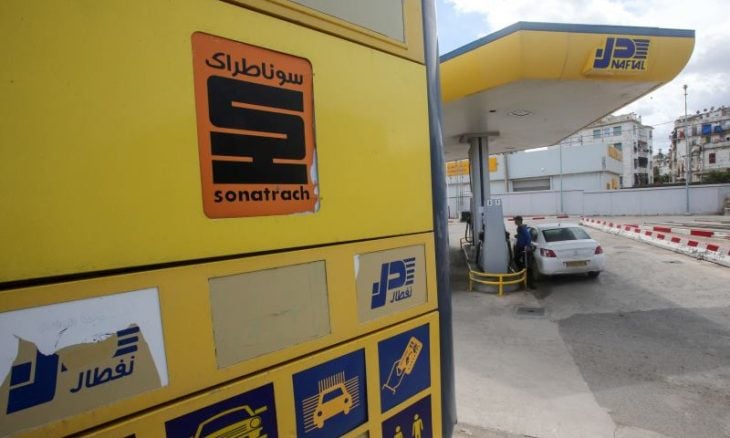
The decision to update fuel prices in Algeria, which came into effect starting January 1, sparked a wide wave of social and economic controversy, which was quickly reflected on the ground in the form of protests and a strike launched by drivers, especially those working in urban and interstate transportation. The Ministry of Hydrocarbons and Mines justified this decision.
In an official statement, it aims to ensure continuous supply to the national market and cover the increasing production and distribution costs, while emphasizing that the state is still bearing the large difference between the real cost of fuel and its price at the station, within the framework of a support policy that has not changed since 2020.
After this sudden decision, the citizen found himself facing a complete paralysis of transportation through most transportation stations, as a result of the strike launched by drivers in protest against the increases that affected the prices of gasoline, diesel, and liquefied petroleum gas. According to official figures, the price of gasoline rose from 45.62 DZD to 47 DZD per litre, and diesel fuel from 29.01 DZD to 31 DZD per liter, while the price of “Sergas” jumped from 9 DZD to 12 DZD per litre. These are increases that drivers considered a direct burden on their daily activity, in light of a rigid transport price that was not reviewed in proportion to the new rise in the cost of fuel.
While the Ministry confirms that these prices do not reflect the true cost of the product, and that the public treasury still bears the greatest burden in order to preserve purchasing power and support economic activities, drivers believe that the decision was taken without concrete accompanying measures that protect their profession from immediate repercussions. The Ministry also stressed that “Sergas” remains the most economical fuel in Algeria and is four times lower than gasoline, in the context of encouraging an environmental and economic option. However, the field reality has shown that switching to this alternative is still limited among broad categories of transportation professionals.
Houari Tigresi: Modernizing fuel prices raises the challenge of balancing the cost of transportation and production
In this regard, economic expert Houari Tigresi confirmed in a statement to the “elhiwar us” newspaper that the recent rise in fuel prices, especially diesel, cannot be treated as an isolated price, but rather as a transient production input for all sectors, noting that the first direct repercussions appear on the cost of transportation, which constitutes the first link in the transmission of the inflationary shock within the economy.
Tigresi explained that the increase in gasoline and diesel prices has an almost immediate impact on land transport of goods, public and private transport, as well as the transport of agricultural products from production areas to wholesale markets, considering that diesel is the most sensitive fuel in this equation, as it is widely used in heavy trucks, agricultural tractors and some means of public transport, which directly leads to an increase in the cost of the transported kilometer, and then an increase in the prices of services and goods.
Regarding the cost of production, the economist stressed that fuel is an essential intermediate element in the production process, whether through operating machines, generating energy in some units, or transporting inputs and outputs, pointing out that energy-intensive or logistical industries are affected gradually but cumulatively, which increases pressure on prices in the medium term.
Regarding the most affected sectors, Tigresi ranked the transportation sector at the forefront of those affected, due to the immediate impact of the increases and the weak margin of maneuver in pricing, stressing that transportation is the primary vector of inflation towards the rest of the sectors. He also pointed out that the agricultural sector is exposed to high damage, albeit indirect, as a result of the high cost of diesel used in plowing, watering and harvesting, in addition to the increased cost of transporting fresh produce, warning that any pressure on agriculture is directly reflected in food security and the prices of basic materials.
As for the industrial sector, Tigresi believes that the degree of damage ranges between medium and high, especially for manufacturing and transportation-related industries, while heavy industries remain less affected if they rely on subsidized energies such as electricity and gas, explaining that the ability of industrial institutions to absorb the shock varies according to their size, the degree of their local integration, and the flexibility of pricing their products. On the other hand, it was considered that the services sector remains relatively the least affected, as the impact on it is limited to indirect aspects such as the movement of workers and logistics, with the exception of digital and administrative services, which remain almost isolated from this type of shocks.
Regarding purchasing power, the economic expert warned that the most dangerous impact of the rise in diesel prices remains indirect, as it affects the citizen even if he does not consume fuel directly, through the rise in the prices of vegetables and fruits, the increase in public transportation costs, and the high cost of manufactured goods, which leads to inflation that affects the basic basket.
He added that the stability of wages or the slow pace of their adjustment compared to the accelerating pace of prices leads to the erosion of the citizen’s real income and a decrease in purchasing power without an official announcement of high inflation rates.
Houari Tigresi concluded his statement by emphasizing that the impact of rising fuel prices varies socially, with vulnerable and middle groups being more affected, along with residents of rural and southern regions due to long travel distances, stressing that diesel fuel constitutes a pivotal link in the indirect inflation equation, and that any adjustment in its prices requires precise accompanying measures to avoid transmission of the shock to the social and economic fabric.
Ismail Hamrouni: Raising fuel prices is necessary to achieve financial balance and protect the economy
For his part, Chairman of the Council for Investment and International Cooperation, Ismail Hamrouni, considered that raising fuel prices at the beginning of 2026 represents a necessary step to achieve financial balance, but at the same time it carries great challenges to the living stability of citizens.
The expert explained in a statement exclusively to the Algeria Newspaper that fuel constitutes the backbone of the economic cycle, and any increase in its prices automatically leads to inflation of logistical costs and an increase in the cost of shipping goods and raw materials, which is reflected in the price of the final product. He added that the impact is not limited to transportation only, but also extends to the prices of vegetables, fruits, and manufactured materials, as the percentage of increase in the market could exceed the percentage of the actual increase in fuel due to “market psychology.”
Regarding the most affected sectors, he pointed out that the transportation sector is the most directly affected, whether in transporting passengers or goods, as fuel represents more than 30% of operating expenses. As for agriculture, it relies heavily on diesel fuel to operate water pumps, tractors, and harvesting machines, which makes any increase directly affect the prices of basic agricultural products. He added that manufacturing and logistics industries are also affected, while the impact of the increase on the services sector remains relatively limited.
Regarding purchasing power, the expert pointed out that vulnerable groups, such as those with limited income and the unemployed, are the most vulnerable to the repercussions of high prices, especially through the increase in the cost of urban transportation and the impact of the prices of basic materials as a result of the high costs of transporting them from farms to markets.
The Chairman of the Board of Investment and International Cooperation continued that developed countries, such as Germany, Norway and Japan, are adopting “smart transformation” strategies to fill the financial deficit without placing a direct burden on the citizen on prices, stressing that Algeria has structural alternatives that can be applied, including:
Digitizing the tax sector and expanding the tax base to include the parallel economy, reforming public institutions and converting loss-making companies into productive companies or partially privatizing them,
Stimulating investment in renewable energies and the use of solar energy locally, as well as issuing “sovereign sukuk” bonds to attract national savings away from direct debt.
The expert concluded his statement by emphasizing that the success of any economic reform depends on the availability of strong social safety networks that protect citizens from price fluctuations, while maintaining a balance between financial stability and the citizen’s purchasing power.
In conclusion, it can be said that the apparent discrepancy between the official discourse that focuses on the continuity of supply and the modernization of service stations, and the protests that reflect the pressure on costs on drivers, has brought back the issue of fuel prices to raise once again the problem of the balance between the necessities of economic reform and the requirements of social stability, in a scene that confirms the sensitivity of any amendment that affects the support system without consensus or clear transitional solutions. Fahima. for
#Experts #detail #repercussions #sudden #change #fuel #prices #Algeria