Launching Algeria today, with adoption Digitizationa fierce war against administrative bureaucracy, which is frighteningly widespread at the level of various departments and bodies, and which has always been the main reason for worsening the conditions of citizens, obstructing investments and their aversion to coming to stability in the country, as he previously stressed president On many occasions, he stressed the need to curb the spread of these bureaucratic practices that serve neither the interest of the citizen nor the Algerian economy, calling for the adoption of digitization as a basic solution to these obstacles, given its role in reducing procedures and documents, and facilitating the daily life of citizens.
Considering that agriculture and fishing are considered among the strategic sectors in which President Tebboune stressed the need to remove all administrative and bureaucratic obstacles facing farmers and investors, by accelerating digitization and enhancing technology during all stages of file processing, the appointment of the Minister of Agriculture and Fisheries, Yassine Mahdi Walid, at the head of the sector, comes in line with this government trend, given his background and extensive activity in the field of emerging institutions and digitization, as he previously held the position of Minister Delegate to the Prime Minister in charge ofEmerging institutions and the knowledge economythen Minister of Knowledge Economy, Emerging Enterprises and Micro-enterprises, thus making the digitization of the agricultural sector one of his top priorities, in line with the government’s directions, and in response to the commitments of the President of the Republic.
Open fire on bureaucracy.
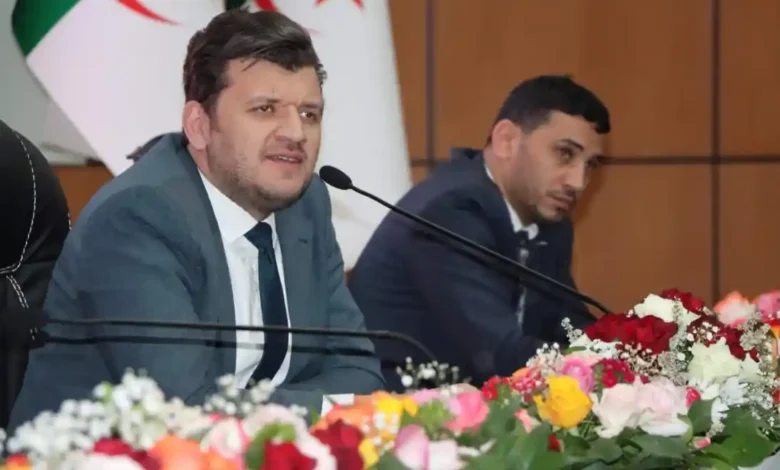
In this window, open Minister of Agriculture, Yassin WalidHe fired on the bureaucracy that is still being recorded by some Algerian administrations, confirming that his ministerial department has taken a number of measures to combat it, stressing in a post on his official Facebook page that “it is never possible to build a strong economy with a culture of ‘wali tomorrow.’” The minister also stressed that the role of the administration, especially in the agricultural sector, is to find solutions for the citizen, and not to search for justifications, indicating that it is no longer a secret to anyone that bureaucrats They have a good understanding of the skill of argumentation.”
The Minister also pointed out, in his publication, that one of the priorities of the agricultural sector today includes reducing the burden of administration on farmers through a number of measures, mainly represented in simplifying administrative procedures and eliminating unnecessary ones, digitizing all administrative paths, setting clear deadlines for studying files, as well as adopting key performance indicators (KPI) for all officials at the local level, in addition to granting greater opportunities to young talents. In this context, the Minister noted that agriculture today contributes 15 percent of the gross domestic product (GDP), stressing that “any obstruction to the interests of farmers is a direct harm to the national economy.”
With a production value of $37 billion, it achieved The agricultural sector Algeria has made a qualitative leap that has made it rank second in terms of contribution to the gross domestic product (GDP) at 15% after the hydrocarbons sector. This achievement came thanks to continuous government support, which included raising the purchase prices of grains and legumes from farmers, and increasing the percentage of fertilizer subsidies to 50% of their reference price, which helped farmers face price fluctuations in international markets. Expanding the electricity network to include tens of thousands of farms and agricultural areas also played a major role in improving productivity.
Betting on digitalization…
Algeria is betting heavily on digitalization as a fundamental pillar to advance the agricultural sector and strengthen it further so that it is a pivotal tributary to the national economy outside the hydrocarbons sector. Perhaps the recent visit that led the Minister of Agriculture and Fisheries to the state of Blida, and sparked a wave of controversy, due to the exposure of one of the administrative bureaucratic practices, reflects a great desire to strengthen this sector and link it to digital technology in a way that enhances transparency and closes the doors to all bureaucrats and opportunists, who harm the sector and obstruct projects and investments, at a time when the country is in dire need of it to achieve the highest desired levels of food security, in light of the growing climate challenges. As well as geopolitical variables, which are pushing the prices of consumer goods, including strategic agricultural crops, to record levels.
In this context, the Minister of Agriculture, a few days ago, made a visit to the state of Blida, which ended with the termination of the duties of the director of the agricultural chamber in the state. The incident is due to the Minister’s intervention on behalf of a citizen with the aim of granting him a Falah card, which is a necessary document for practicing activity and benefiting from support mechanisms. However, the concerned official refused to hand it over on the same day under the pretext of administrative procedures, and stated to the citizen in a statement that he would not obtain it on that day. The dismissed official’s behavior falls into the category of administrative and bureaucratic obstruction.
Digitization of agriculture is among the priorities of the President of the Republic
The Minister of Agriculture, Yassin Walid, had previously bet on the digitization of the sector, as he assumed his duties last September after assuming the position of Minister of Vocational Training and Education. Walid stressed that digitization will be an effective tool that will contribute to solving the chronic problems associated with the agricultural sector, by facilitating access to data and improving resource management. As he highlighted in previous statements, the Ministry of Agriculture seeks to develop a public sector policy that has a real impact in the field, so that it is realistic and compatible with the requirements of the agricultural reality.
Considering that the file of digitization of agriculture is the bet of the President of the Republic, President Tebboune placed the file of agricultural mechanization at the top of executive priorities, during the Council of Ministers meeting that he chaired in his capacity as Supreme Commander of the Armed Forces and Minister of National Defense, last February, where he stressed the necessity of immediately liberating the agricultural sector from the bureaucratic tendency that hinders its profitability. Moving from the logic of obstructive measures to the logic of direct field service to farmers. The central message that came out of the Council of Ministers meeting is to move from a heavy administrative approach to a flexible field dynamic, which makes cooperatives an organizational tool for pooling resources and facilitating access to technical services, instead of keeping agriculture hostage to lengthy procedures and regulatory complexities. Increasing production yields is not only linked to expanding cultivated areas, but also to improving exploitation efficiency through modern mechanization and timely intervention during the various stages of the agricultural cycle. In addition, the President of the Republic has previously instructed the government to immediately begin accelerating the path of digitization and accurate statistics as a basic work system in all sectors, especially in state property, taxes, customs, and the budget, in a way that contributes to enhancing transparency, combating corruption, and curbing all suspicious practices that hinder investments in the national economy.
#Algeria #wages #open #war #administrations #bureaucracy #Algeria