Algeria regains its position as Spain’s first energy partner during the year 2025 – New Algeria

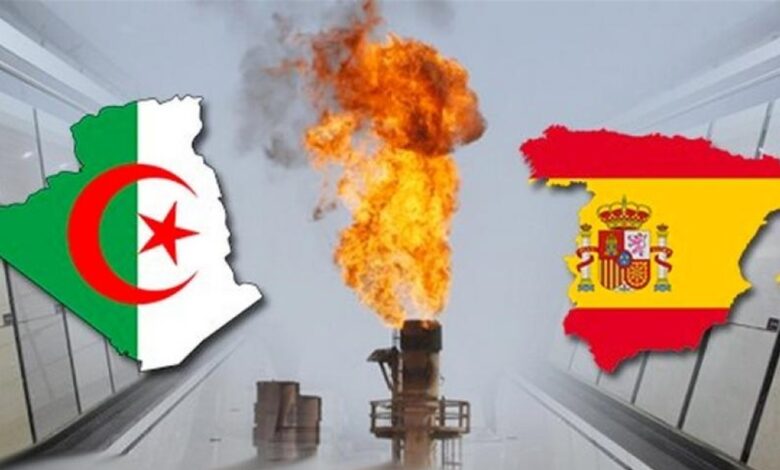
The latest official data issued by the gas network operator in Spain, Enagaz, revealsEnagásAlgeria once again topped the list of natural gas suppliers to the Spanish market during the year 2025, thus confirming the restoration of its position as Madrid’s first energy partner in a very complex European circumstance, in which geopolitical transformations intersect with energy security calculations and commercial pressures, according to what was reported by Spanish and European media.
According to the numbers recorded until December 2025, Algeria’s exports of natural gas to Spain amounted to a total of 128,504 gigawatts per hour, which is equivalent to between 34.5% and 38.5% of Spain’s total imports of this vital material, according to the approved calculation methods. This performance enabled Algeria to maintain the lead for the third year in a row, with the exception of 2022, in which it temporarily lost first place to the United States at the height of the energy crisis that followed the outbreak of the Russian-Ukrainian war.
A breakdown of these numbers shows that the backbone of Algerian supplies remained mainly dependent on gas transported through pipelines, as the “Medgas” pipeline formed the main channel that pumped about 107,179 gigawatts per hour during 2025, i.e. more than four-fifths of the total quantities exported. On the other hand, Algerian liquefied natural gas shipments amounted to about 21,325 gigawatts per hour, recording a slight decline compared to the year 2024, without affecting the total share or Algeria’s position at the top of the suppliers. This balance between pipeline gas and liquefied gas reflects a clear competitive advantage, especially in a market that seeks long-term stability more than temporary deals.
In parallel, the Spanish market witnessed an unprecedented influx of American liquefied gas, as imports from the United States increased by 98% compared to 2024, reaching 111,660 gigawatt-hours, or approximately 30% of Spain’s total imports. This rise comes in a stressful political and economic context, coinciding with the return of Donald Trump to the White House, and the accompanying direct calls to the Europeans, including Spain, to increase dependence on American gas. However, this jump, despite its size, did not succeed in displacing Algeria from the lead, which confirms that liquefied gas, regardless of its quantity, is still less able to compete with pipeline supplies in terms of cost and regularity.
On this basis, these indicators reveal that Algeria has not only regained its position as the largest gas supplier to Spain, but has also consolidated its role as an unsurmountable energy partner in southern Europe, at a moment characterized by uncertainty and the intersection of economic and geopolitical considerations. The stability of supplies through Medgas, and Algeria’s ability to maintain its share despite American pressure and the decline of traditional suppliers, confirm that the Algerian-Spanish energy relationship has transcended the logic of circumstantialism, entering the stage of a strategic partnership based on reliability and mutual interest in the long term.
In the opposite direction, Spain’s imports of Russian gas continued their sharp decline, declining during 2025 by 41% compared to the previous year, to stabilize at 42,629 gigawatt-hours, equivalent to only about 11% of total imports. This decline comes in light of the continuing repercussions of the war in Ukraine, and the escalation of the European trend towards reducing dependence on Moscow, even though natural gas was not officially included in the sanctions imposed on Russia. The proposals put forward by the European Commission, aiming to ban imports of Russian gas before 2028 while accelerating the date to 2027, also contributed to reducing the Spanish market’s appetite for this source.
In the same context, Qatari liquefied gas recorded a remarkable decline, as its exports to Spain during 2025 did not exceed the level of 6,403 gigawatt-hours, compared to 11,291 gigawatt-hours in 2024, which reflects the intensification of competition in the liquefied gas market, and the shift in European demand towards suppliers that are geographically closer or less expensive and more regular.
As for the level of internal demand, the Spanish operator’s data shows that natural gas consumption in Spain increased during 2025 by 6.3% compared to 2024, to reach 331,464 gigawatt-hours. This increase is mainly due to the large jump in gas consumption for electricity generation, which rose by more than 33% to reach 99,680 gigawatt-hours, at a time when traditional consumption recorded a slight decline. Spain’s gas exports also increased by 17.4% to reach 40.5 terawatt-hours, while total withdrawals, that is, internal demand plus exports, reached about 372 terawatt-hours. In terms of reserves, Spain ended the year 2025 with a filling rate of underground storage amounting to 68%, compared to 83% at the end of 2024, a decline that reflects a higher pace of withdrawals during the year, driven by increased demand for electricity and market fluctuations.
Abdo.H
#Algeria #regains #position #Spains #energy #partner #year #Algeria