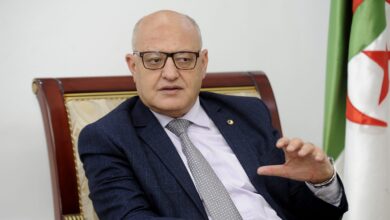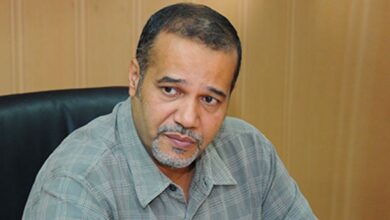
The Speaker of the National Assembly, Azouz Nasseri, renewed the reminder of the principled and firm position of the Algerian state, which was expressed by the President of the Republic on more than one occasion, especially in relation to the issue of compensation, stressing that Algeria, which sacrificed millions of martyrs for the sake of its freedom and independence, does not trade its memory or sovereignty for any material return, but rather clings to recognition.
In his speech on the occasion of the meetings of the equal-member committee of the two chambers of Parliament to propose a text relating to the provisions in dispute between the two chambers regarding the text of a law relating to the criminalization of French colonization of Algeria, Nasseri called for the formulation of a reference and model law that goes beyond the national framework to constitute a pioneering legislative precedent at the African level, and establishes a clear legal approach in dealing with colonial crimes.
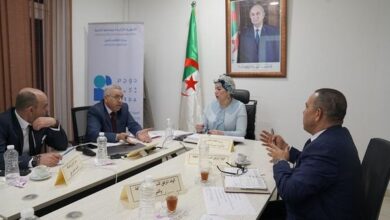
Under the supervision of the Speaker of the Council and in implementation of the provisions of Article 145 (paragraph 5) of the Constitution, and in response to the request of the Prime Minister aimed at activating the mechanism of the Equal Member Committee in order to propose a consensus formula for the text relating to the criminalization of French colonialism in Algeria, the subject of disagreement between the two chambers of Parliament, the Equal Member Committee of the two chambers of Parliament held its first meeting on Thursday at the headquarters of the National Assembly.
The Speaker of the National Assembly, who accompanied the beginning of the committee’s work, delivered an orientation speech in which he stressed that the committee’s undertaking of its tasks represents a turning point in the process of addressing this text with a historical and sovereign dimension, stressing the necessity of elevating it to the level of solid reference legislation, based on solid legal foundations and reflecting the constants of the Algerian state.
He also renewed the reminder of the principled and firm position of the Algerian state, which was expressed by the President of the Republic, Abdelmadjid Tebboune, on more than one occasion, especially in relation to the issue of compensation, stressing that Algeria, which sacrificed millions of martyrs for the sake of its freedom and independence, does not trade its memory or sovereignty for any material return, but rather clings to recognition, calling for the drafting of a reference and model law that goes beyond the national framework to constitute a pioneering legislative precedent at the African level, and dedicates a clear legal approach to Dealing with colonial crimes.
After that, the invitation to hold this meeting was sent by the oldest member of the committee, Baghija Saad, a deputy in the National People’s Assembly, in accordance with the provisions of Article 91 (first paragraph) of Organic Law No. 16-12 specifying the organization and work of the National People’s Assembly and the National Assembly, as well as the functional relations between them and the government, amended and supplemented, and in the presence of the government representative, so that the work of the meeting continues, with the election of the committee’s bureau unanimously by those present in accordance with the applicable legal and regulatory procedures, in the three paragraphs of Article 91 of Organic Law No. 16-12, amended and supplemented.
The formation was as follows: Nour Al-Hajj, from the National Assembly, as Chairman of the Committee, Baghija Saad, from the National People’s Assembly, as Vice-President, Bousdaria Faisal, from the National Assembly, as rapporteur, and Muhammad Fawzi Ben Djaballah, from the National People’s Assembly, as rapporteur.
In his speech on this occasion, Nour Al-Hajj, Chairman of the Equal-Member Committee, stressed that the commencement of the committee’s work is an actual embodiment of the constitutional mechanisms aimed at enhancing consensus and ensuring the quality and coherence of legislation, stressing that the task entrusted to it is not a formal procedure, but rather an institutional responsibility that requires developing a consensus formula that reflects the will of the two chambers and preserves the harmony approved by the Constitution.
It is worth noting that the activation of this mechanism came after the National Assembly refused to ratify thirteen articles of the text of the law criminalizing French colonialism in Algeria, during its public session held on Thursday, January 22, 2026.
#Algeria #trade #memory #sovereignty #financial #return
#oussama_boulegheb #elhiwardz #alakhibariat.xyz #elhiwar #elhiwar-en