The literal text of the “Peace Council” charter, which US President Donald Trump is forming, did not mention Gaza, even though it was essentially linked to the launch of the second phase of the ceasefire between Israel and the “Hamas” movement.
Each country nominated for a permanent seat in the “Peace Council” must pay “more than one billion dollars in cash,” according to the council’s “charter.”
The introduction to this charter, which was sent to the countries invited to participate in the Council, stated that “The Peace Council is an international organization that aims to promote stability, re-establish reliable and legitimate governance, and ensure lasting peace in areas affected by or threatened by conflict.”
The eight-page charter criticizes “approaches and institutions that have repeatedly failed,” in a clear reference to the United Nations, and calls for “courage” to “separate from it.” It also stresses “the need for a more flexible and effective international peace organization.”
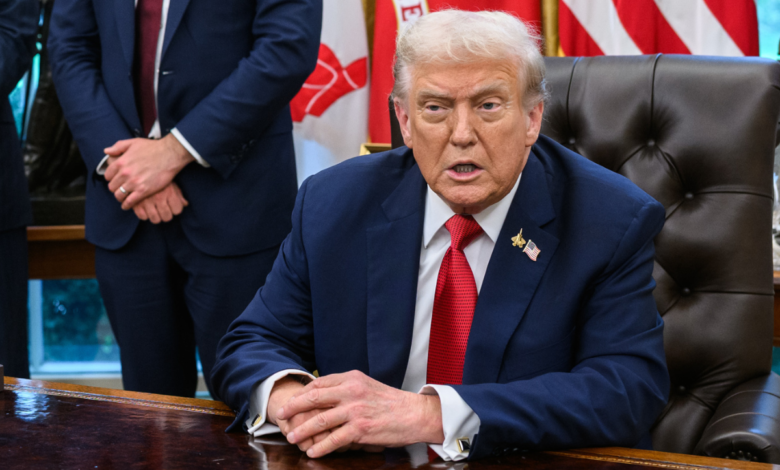
Trump will be the first president of the “Peace Council,” with very broad powers, as he will be the only one authorized to “invite” other leaders to join it, and he can cancel their participation unless he uses “a veto by a two-thirds majority of member states,” and he has the right to review all votes.
The eight-page charter criticizes “approaches and institutions that have repeatedly failed,” in an apparent reference to the United Nations, and calls for “the courage” to “separate from it.”
The Charter added: “Each member state enjoys a maximum term of three years from the date of entry into force of the Charter, subject to renewal by the President.
This three-year mandate does not apply to member states that pay more than $1 billion in cash to the Peace Council during the first year following the entry into force of the Charter.
The following is a translation of the literal text of the “Peace Council Charter” published by the “Times of Israel” website:
**Preamble
We declare that lasting peace requires practical wisdom, logical solutions, and the courage to abandon approaches and institutions that have failed time and again; Recognizing that lasting peace is established when people are empowered to take charge of their future and bear responsibility for it; Affirming that only a sustainable and effective partnership based on sharing burdens and obligations can achieve peace in areas where peace has remained elusive for a long time; Regretting that many peacebuilding approaches entrench permanent dependency and perpetuate crises rather than leading people to overcome them; Emphasizing the need for a more flexible and effective international peacebuilding body; Resolving to form a coalition of willing States committed to practical cooperation and effective action, wisely and justly, the Parties hereby endorse the Charter of the Peace Council.
Article 1: Mission
** Chapter One – Objectives and tasks
The Peace Council is an international organization that seeks to promote stability, re-establish good and legal governance, and ensure lasting peace in areas affected or threatened by conflict.
Charter: The Peace Council is an international organization that seeks to promote stability, re-establish good and lawful governance, and ensure lasting peace in areas affected or threatened by conflict.
The Peace Council will undertake peacebuilding tasks in accordance with international law, as recognized under this Charter, including the development and dissemination of best practices that can be applied by all peace-seeking States and communities.
** Chapter Two
Membership
Article 2.1: Member States
Membership in the Peace Council is limited to states invited by the President to participate, and membership begins immediately upon notification of the state’s agreement to abide by this Charter, in accordance with Chapter Eleven.
Article 2.2: Responsibilities of Member States
(a) Each Member State shall be represented in the Peace Council by its Head of State or Head of Government.
(b) Each Member State shall support and assist the operations of the Peace Council in accordance with its domestic legal authorities.
No provision of this Charter shall be construed as granting the Peace Council jurisdiction within the territory of Member States, or obligating them to participate in any specific peacebuilding mission, without their consent.
(c) The term of membership of each state shall be a maximum of three years from the date of entry into force of this Charter, subject to renewal by the President.
The three-year membership term does not apply to Member States that contribute more than US$1 billion in cash to the Peace Council within the first year of the Charter’s entry into force.
Article 2.3: Termination of Membership
Membership expires on the earliest of the following dates:
(1) The term of three years has expired, in accordance with Article 2.2(c) and is renewable by the President.
(2) Withdrawal, in accordance with Article 2.4.
(3) The President’s decision to dismiss a member state, subject to the right of veto by a two-thirds majority of member states.
Trump will be the first president of the “Peace Council,” with very broad powers, as he will be the only one authorized to “invite” other leaders to join him, and he can cancel their participation unless he uses “a veto by a two-thirds majority of member states,” and he has the right to review all votes.
(4) Dissolution of the Peace Council in accordance with Chapter Ten. A Member State whose membership expires loses its status as a party to the Charter, but may be invited back to join as a member, in accordance with Article 2.1.
Article 2.4: Withdrawal
Any Member State may withdraw from the Peace Council immediately by notifying the President in writing.
** Chapter Three – Governance
Article 3.1: Peace Council
(a) The Peace Council shall consist of its member states.
(b) The Peace Council shall vote on all proposals on its agenda, including on annual budgets, the establishment of subsidiary entities, the appointment of senior executives, and major political decisions, such as the approval of international agreements and the pursuit of new peacebuilding initiatives.
(c) The Peace Council shall hold voting meetings at least once a year, and at such additional times and places as the President deems appropriate. The Executive Council sets the agenda for these meetings, taking into account the notification and comments of Member States and the approval of the President.
(d) Each Member State has one vote in the Peace Council.
(e) Decisions shall be taken by a majority of the votes of the Member States present and voting, subject to the approval of the President, who may also vote as President in the event of a tie.
(f) The Peace Council shall hold periodic, non-voting meetings with its Executive Council, at which Member States may provide recommendations and guidance on the activities of the Executive Council, and the Executive Council shall report to the Peace Council on its operations and decisions. These meetings are held at least once every three months, and the time and place are determined by the CEO of the Executive Council.
(g) Member States may select an alternative high-level representative at all meetings, subject to the approval of the President.
(h) The President may extend invitations to relevant regional economic integration organizations to participate in the work of the Peace Council on such terms and conditions as he deems appropriate.
Article 3.2: President
(a) Donald J. Trump serves as the inaugural President of the Peace Council, and separately serves as the inaugural Representative of the United States of America, subject only to the provisions of Chapter III.
(b) The President shall have exclusive authority to create, modify, or dissolve subordinate entities as necessary or appropriate to accomplish the mission of the Peace Council.
Article 3.3: Succession and Replacement
The President shall at all times appoint a successor to the position of President. The President may not be replaced except in the event of voluntary resignation or incapacity, with the unanimous approval of the Executive Council, whereupon the successor to the appointed President shall immediately assume the office of President and shall enjoy all his duties and powers.
Article 3.4: Subcommittees
The Chairman may form subcommittees as needed or appropriate, and determines the terms of reference, structure, and governance rules of each subcommittee.
** Chapter Four – The Executive Council
Article 4.1: Executive Council composition and representation
(a) The President chooses the Executive Council, which must be composed of leaders of international standing.
(b) The term of membership of members of the Executive Council shall be two years, and the President may dismiss them and renew their membership at his discretion.
(c) The Executive Council shall be chaired by a Chief Executive nominated by the President and confirmed by a majority vote of the Executive Council.
(d) The CEO shall convene the Executive Board to meet every two weeks during the first three months of its establishment, and then monthly thereafter, with additional meetings as the CEO deems appropriate.
(e) Decisions of the Executive Council shall be taken by a majority of its members present and voting, including the Chief Executive Officer. These decisions shall enter into force immediately, subject to the President’s veto power at any subsequent time.
(f) The Executive Council shall determine its rules of procedure.
Article 4.2: Mandate of the Executive Council
The Executive Council undertakes the following tasks:
(a) To exercise the powers necessary and appropriate to carry out the mission of the Peace Council, consistent with this Charter.
(b) Submit reports to the Peace Council on its activities and decisions every three months, in accordance with Article 3.1(f), and at additional times determined by the President.
Article 5.1: Expenses
** Chapter Five – Financial Provisions
The Peace Council’s expenses are financed through voluntary funding from Member States, other countries, organizations, or other sources.
Article 5.2: Accounts
The Peace Council may authorize the establishment of accounts as needed to carry out its mission, and the Executive Council may establish mechanisms for oversight and oversight of budgets, financial accounts and payments, as necessary or appropriate to ensure their integrity.
** Chapter Six: Legal status
Article 6
(a) The Peace Council and its subsidiary bodies shall have international legal personality and shall have the legal capacity necessary to exercise its functions (including, but not limited to, the capacity to conclude contracts, possess and dispose of real estate and movable property, file lawsuits, open bank accounts, receive and spend private and public funds, and employ employees).
(b) The Peace Council shall ensure the provision of privileges and immunities necessary for the exercise of its functions and the functions of its subordinate bodies and employees, by agreements with the States in which the Peace Council and its subordinate bodies operate, or through any other measures taken by those States in accordance with their domestic legal requirements. The Council may delegate the authority to negotiate and conclude such agreements or arrangements to designated officials within the Peace Council and/or its subordinate bodies.
Article 7
** Chapter Seven – Interpretation and dispute settlement
Internal disputes between Peace Council members, entities and staff, regarding matters relevant to the Peace Council, shall be resolved through friendly cooperation, in accordance with the organizational powers set out in the Charter.
For this purpose, the President is the final authority regarding the meaning, interpretation and application of this Charter.
** Chapter Eight – Amendments to the Charter
Article 8
The Executive Council or at least one-third of the member states of the Peace Council, taken together, may propose amendments to the Charter.
The proposed amendments shall be circulated to all Member States at least thirty (30) days before voting on them.
These amendments shall be approved by two-thirds of the members of the Peace Council and ratified by the President.
Amendments to Chapters II, III, IV, V, VIII, and X require the unanimous approval of the Peace Council and the ratification of the President.
When the relevant conditions are met, the amendments will enter into force on the date specified in the amendment decision, or immediately if no date is specified.
Article 9
** Chapter Nine – Decisions or other directives
The President, on behalf of the Peace Council, is authorized to adopt resolutions or other directives, consistent with this Charter, to carry out the mission of the Peace Council.
** Chapter Ten – Duration, solution and transition
Article 10.1: Duration
The Peace Council shall continue until dissolved in accordance with the provisions of this Chapter, whereupon this Charter shall also terminate.
Article 10.2: Conditions for Dissolution
The Peace Council shall dissolve at such time as the President deems necessary or appropriate, or at the end of each odd-numbered year, unless renewed by the President not later than November 21 of that odd-numbered year.
Charter: The Peace Council shall dissolve at such time as the President deems necessary or appropriate, or at the end of each odd-numbered year, unless renewed by the President not later than November 21 of that odd-numbered year
The Executive Council shall establish the rules and procedures related to the settlement of all assets, liabilities and liabilities upon dissolution.
** Chapter Eleven – Entry into force
Article 11.1: Entry into force and provisional application
(a) This Charter shall enter into force as soon as three States agree to be bound by it.
(b) States requested to ratify, accept or approve this Charter through their internal procedures shall agree to apply its provisions provisionally, unless such States inform the President at the time of signing of their inability to do so.
States that do not provisionally implement this Charter may participate as non-voting members in the proceedings of the Peace Council pending the ratification, acceptance or approval of the Charter, consistent with their domestic legal requirements, subject to the approval of the President.
Article 11.2: Depositary
The original text of this Charter, and any amendment thereto, shall be deposited with the United States of America, which is hereby designated as its depositary.
This Charter enters into force once three countries agree to be bound by it.
The Depositary shall immediately submit a certified copy of the original text of this Charter, and any amendments or additional protocols thereto, to all signatory States.
** Chapter Twelve: Reservations
Article 12
No reservations may be made to this Charter.
** Chapter Thirteen: General Provisions
Article 13.1: Official language
The official language of the Peace Council shall be English.
Article 13.2: Headquarters
The Peace Council and its subsidiary bodies may, in accordance with the provisions of the Charter, establish headquarters and field offices.
The Peace Council negotiates with the host State or States, as appropriate, the headquarters agreement and agreements governing field offices.
Article 13.3: Seal
The Peace Council shall have an official seal, approved by the President.
In witness whereof, the undersigned, duly authorized, have signed this Charter.
(agencies)
#AlHiwar #publishes #full #text #Peace #Council #charter #proposed #Trump
#oussama_boulegheb #elhiwardz #alakhibariat.xyz #elhiwar #elhiwar-en