President Tebboune’s speech on including colonialism among the most serious international crimes – New Algeria

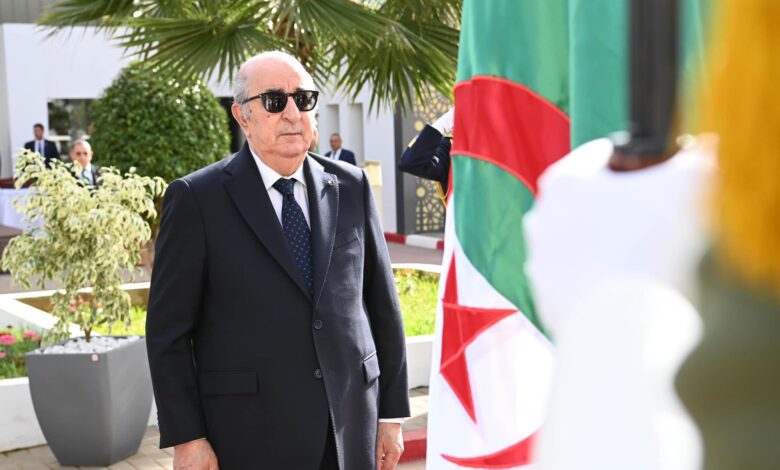
face president, Abdelmadjid Tebboune, today, Sunday, during the 39th African Union Summit in Addis Ababa, delivered a speech regarding the study related to the repercussions of considering colonialism a crime against humanity, as well as considering some acts committed during the era of enslavement, deportation and colonialism as acts of genocide against peoples. AfricaIt was followed by the Prime Minister, Seifi Gharib. This is its full text:
“In the name of God, the Most Gracious, the Most Merciful, and may blessings and peace be upon the most honorable of messengers
Mr. President,
Your Excellencies and Excellencies,
Distinguished ladies and gentlemen,
At the beginning of its speech, Algeria extends its sincere congratulations and highest expressions of appreciation to the African Union Commission on International Law for the sober and in-depth study it has completed, which represents a qualitative and extremely important addition to the path of collective African legal thinking.
This study comes in direct implementation of Resolution No. 934 adopted by our conference during its previous session, to shed light on the legal implications resulting from describing colonialism as a crime against humanity, and on adapting some practices associated with the era of slavery, forced deportation and colonialism as acts amounting to the crime of genocide against African peoples.
While Algeria appreciates this distinguished scientific and legal effort, it affirms its full and firm support for all the initiatives undertaken by the African Union Commission and its competent legal bodies, aiming to establish a clear and frank legal approach that includes colonialism among the most serious international crimes, in a way that strengthens the principles of accountability, establishes the absence of impunity, and contributes to the establishment of fair historical justice.
Algeria also calls for the establishment of explicit and unequivocal international recognition, by international organizations and colonial powers, of the criminal nature of the practices that included enslavement, forced deportation, ethnic cleansing, torture, displacement, and systematic persecution, which are practices that are unique in their scope and brutality in modern human history.
Mr. President,
Distinguished ladies and gentlemen,
Based on its bitter national experience, which extended for more than one hundred and thirty-two years of extremely cruel settler colonialism, Algeria expresses its full readiness to place the documents, material evidence and reliable historical testimonies in its possession at the disposal of the competent African legal bodies.
These data highlight the extent of the atrocities and grave violations committed to suppress the resistance of the Algerian people, including resorting to widespread repression and the use of means and methods prohibited under international law.
Within the framework of the mandate granted to my country, along with Togo, South Africa and Ghana, to follow up on the implementation of Resolution 934 within the thematic activities of the African Union for the year 2025, Algeria, in cooperation with the African Union Commission, took the initiative to organize a high-level international conference on November 30 and December 1, 2025, under the slogan: “Crimes of Colonialism in Africa: Towards Consolidating Historical Truth and Criminalizing Colonialism,” a conference that witnessed broad participation by foreign ministers and international law experts, Historians and academics from Africa, Europe, the Americas and the Caribbean.
The in-depth discussions resulted in the adoption of the “Algeria Call,” which included a number of recommendations, the most prominent of which are: the call for official recognition of colonial crimes, and serious work towards explicitly including the criminalization of colonialism within the rules of international law.
Promoting the documentation of colonial crimes and preserving African historical memory as an integral part of historical justice.
Ensuring the recovery of looted cultural property, national archives, and human remains of victims of colonialism.
Emphasizing international responsibility towards the profound environmental and economic impacts left by colonial policies on the African continent.
In the same context, Algeria expresses its satisfaction at the adoption of its proposal to designate an official African day to commemorate the martyrs of Africa, which falls on November 30 of each year, in a way that contributes to consolidating historical awareness among rising generations and preserving the memory of the great sacrifices made by the peoples of our continent.
Mr. President, Your Excellencies,
In light of this growing continental movement to reread history in the light of international law, Algeria took an important sovereign step at the national level, as the Algerian Parliament voted, on December 24, 2025, unanimously, for a law criminalizing the colonialism to which Algeria was subjected.
This law aims to establish legal responsibilities, preserve national memory, and establish the principle of no statute of limitations for serious crimes, as it is a fundamental pillar of any serious approach to reconciliation with history.
The law also classifies practices such as extrajudicial executions, torture, rape, nuclear testing on civilians, and the systematic plundering of wealth as crimes without a statute of limitations, based on the principles of international law and the rights of peoples to truth and justice.
Mr. President, Your Excellencies,
The great sacrifices made by millions of Africans for the sake of freedom, dignity and justice cannot be forgotten or reduced to truncated narratives.
Recognizing the historical truth is not a selective evocation of the past, but rather a moral and legal duty, and an indispensable gateway to building balanced international relations, based on mutual respect, fairness, and the preservation of human dignity.
Algeria, while placing this path at the core of its priorities, believes that consolidating historical truth and justice constitutes a solid foundation for more balanced future partnerships, and for a world where law prevails, not the logic of force.
Thank you for listening, and may God’s peace, mercy, and blessings be upon you.”
#President #Tebbounes #speech #including #colonialism #among #international #crimes #Algeria