Royal calls on Macron to take a “step of reconciliation and recognition” with Algeria – the new Algeria

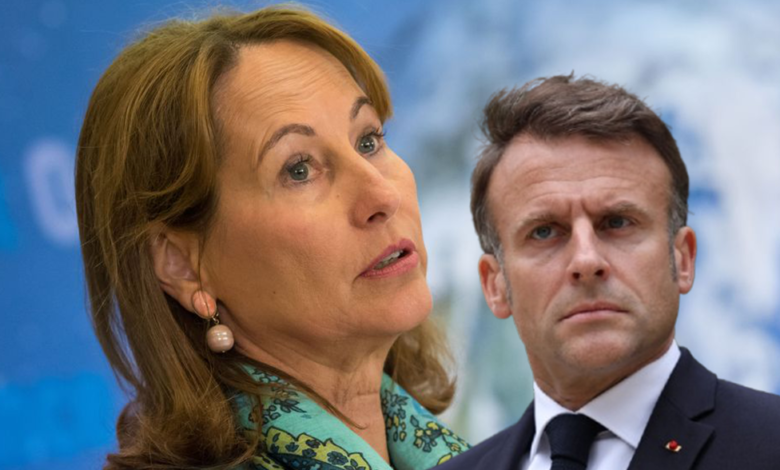
Royal’s statements to the French channel “TF1” came after a visit she made to Algeria last week, which lasted for five days, during which she touched on a number of issues, including the memory file, and received wide media follow-up in Algeria, with much criticism on the French side. The visit of the former French presidential candidate and former Minister of the Environment to Algeria was at the invitation of the Algerian Chamber of Commerce and Industry, data confirmed by Royal herself through her accounts on social networking sites, where she announced her intention to go to Algeria “to listen and build the positive,” and to reach “historic reconciliation” between Paris and Algeria.
In her speech, Royal said that her visit to Algeria came on her own initiative as part of her duties at the head of the association, explaining that she did not request it, but rather was contacted because of what she described as “existing difficulties in activating dialogue between the two countries.” She stated that the Franco-Algerian Friendship Association was founded in 1963 immediately after the reception to Algeria, on the initiative of Germain Taillon and under the auspices of General Charles de Gaulle, and aims to promote dialogue, understanding, listening, and the search for future solutions. She also added that she went to Algeria “to listen, observe, and try to search for prospects for the future.”
Regarding the current situation between the two countries, Royal indicated that the existing rift between Algeria and France has harmed all forms of relations, including economic relations, as French exports stopped in several fields, including agriculture, grains, and livestock exports, in addition to the decline in diplomatic and consular relations after the withdrawal of a number of employees, which, according to her, led to the weakening of the mechanisms for following up on immigration files. In her response to a question about placing responsibility on Algeria or French diplomacy, she stressed that she did not want to adopt confrontational rhetoric, considering that this was not consistent with her role, stressing her conviction that the two countries share a painful common history, and that the repercussions of colonialism “have not been fully recognized.”
Regarding her meeting with the President of the Republic, Abdelmadjid Tebboune, Royal said that all European countries, such as Italy, Spain, and Germany, maintain normal relations with Algeria and conclude partnerships with it, while France remains in an exceptional situation despite the depth of the shared history, pointing out that Algeria is witnessing remarkable economic development, and that it now covers about 80 percent of its drug needs, and that it has also become an investment destination for several countries.
She also indicated that she had noticed increasing international interest in investing in Algeria, through high-level visits by representatives of major countries in the context of investment trends, at a time when Algerian employers’ organizations had been waiting for more than two years for an official visit by a delegation of French employers. Regarding the immigration file, Royal said that she raised the issue of orders to leave French territory (OQTF) during her conversation with President Tebboune, noting that he “invited the French Minister of the Interior to visit Algeria, as was previously scheduled,” considering that “setting preconditions (by French Interior Minister Laurent Nunez) reflects the lack of a real will to go toward dialogue.” In this regard, Royal confirmed that she intends to provide advice to French President Emmanuel Macron, whom she requested to meet, which is to take “a step of reconciliation and recognition,” considering that the Algerians are not demanding financial compensation, but rather official recognition, similar to what other colonial countries have done.”
Royal also called for the return of cultural property that she said was looted during the colonial period, including belongings belonging to Emir Abdelkader, the Algeria cannon located in France, in addition to the archives, as well as the return of human remains preserved in French museums for a proper burial. In her answer to the questions, Royal denied that her positions were linked to electoral calculations, considering that preoccupation with Algeria was “politically unprofitable,” while noting that the prevailing silence in the French political class reflects a kind of hesitation, according to her, at a time when Algeria is witnessing transformations and partnerships that may leave France, in the future, outside this path if the rapprochement is delayed.
It is noteworthy that during her visit, Ségolin-Royal met with French journalist Christophe Glez, who is imprisoned in Algeria on charges of “glorifying terrorism,” and whose case arouses widespread reactions in France. The facts of the French journalist’s case go back to May 2024, when he entered Algeria as a tourist, but was stopped and prosecuted on charges related to “glorifying terrorism” against the backdrop of his contacts with the “MAC” movement, which is classified as a terrorist organization. Royal’s visit to Algeria aroused the ire of the French right, which adopts a hostile stance towards Algeria. It was also met with official coldness in Paris, where the French Foreign Ministry spokesman stated in a press conference that the president of the France-Algeria Association was not delegated by the French authorities, and that her initiative was personal.
Ségolene Royal, a former candidate for the French presidential elections in 2007, is considered among the French political voices calling for an end to the ongoing crisis between Algeria and France since the summer of 2024. Her visit coincided with the context of a new chapter of tension sparked by a television program broadcast by the French public channel “France 2”, after it attacked Algeria and promoted lies insulting to the symbols of the state. Against this background, the Algerian Foreign Ministry summoned the Chargé d’Affairs at the French Embassy in Algeria, in what it called a “dangerous media slide.” The program was described as being closer to a “political trial” than a professional journalistic investigation, as it lacked the simplest rules of balance and verification, and opened the way for inflammatory rhetoric targeting Algeria and its institutions, in a move that re-poisoned the atmosphere and confirmed the fragility of any path to calm as long as the media continues to be used as a tool of political pressure.
Abdo.H
#Royal #calls #Macron #step #reconciliation #recognition #Algeria #Algeria