What is the fate of the reserved articles in the law criminalizing French colonialism? – New Algeria

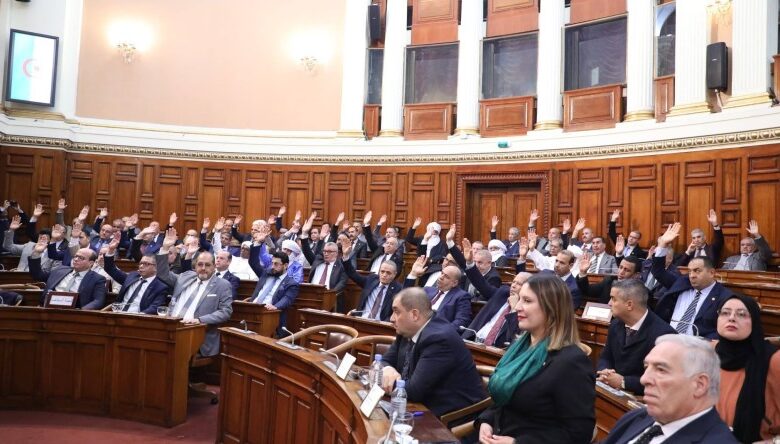
The National Assembly senators’ reservations about 13 articles of the law criminalizing colonialism, which constitute half of its articles, raised profound questions about the legal scenarios and paths that must be followed.
The reservation, which affected 13 articles: 1, 5, 7, 9, 10, 15, 16, 17, 18, 20, 21, 125, requires following the constitutional path within a series of legal procedures specified by Article 145 of the Constitution, which states that “In the event of a dispute between the two chambers, the Prime Minister or the Head of Government, as the case may be, shall request, An equal-member committee consisting of members from both chambers shall meet, within a maximum period of fifteen days, to propose a text related to the provisions in question, and also end its discussions within a maximum period of fifteen days.” Paragraph six of the same article stipulates that “the government shall present this text to the two chambers for approval, and no amendment to it may be made except with the approval of the government.”
The Organic Law issued in 2016, which determines the organization of the work of the two chambers of Parliament and the functional relations between them and the government, frames the working method of the equal-member committee, which includes 10 representatives from each chamber, which meets obligatorily at the request of the Prime Minister to deliberate on the text of the controversial articles, and prepares a report that includes a consensual reformulation of the text of the reserved articles. However, if “the two chambers do not reach, on the basis of the results of the equal-member committee, the approval of a single text, and if the disagreement continues between the two chambers, the government can ask the National People’s Assembly to decide permanently, either by adopting the formula proposed by the equal-member committee, or by adopting and confirming the last text that was previously voted on before the National Assembly reserved it.”
The Constitution and the laws regulating the work of the two chambers of Parliament and the functional relations between them and the government provide the possibility of withdrawing the legal text in question, as paragraph of Article 145 of the Constitution stipulates a, e: “The text shall be withdrawn if the government does not notify the National People’s Assembly in accordance with the previous paragraph.”
In its session yesterday, the National Assembly approved the law criminalizing colonialism, but it made reservations on 13 articles with the aim of reconsidering them and reviewing their provisions, especially those related to the issues of compensation and apology, and justified this by “their (articles) not being consistent with the national trend based on demanding recognition of colonial crimes without compensation or apology.”
Fouad Q
#fate #reserved #articles #law #criminalizing #French #colonialism #Algeria