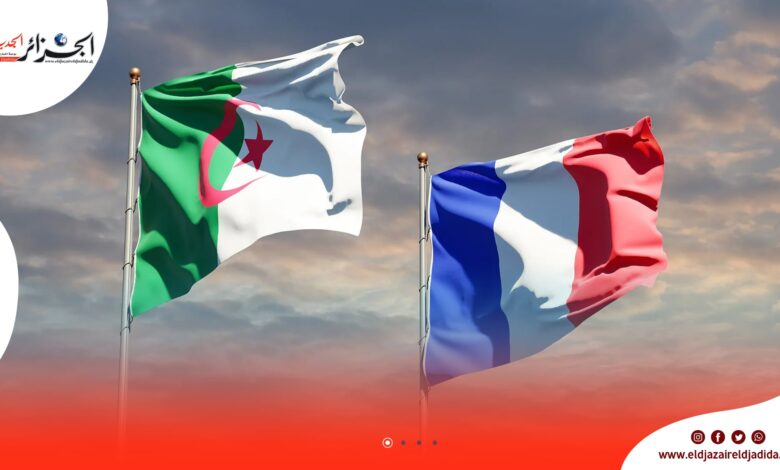
The immigration issue between Algeria and France, through joint agreements concluded in 1968, has returned to the forefront Political debate And the diplomat again, with the French Minister of the Interior, Laurent Nunez, announcing the launch of new consultations between Paris and Algeria on a number of controversial issues, most notably the implementation of deportation decisions from French territory, in parallel with the French authorities beginning to review the 1968 agreement regulating Algerian immigration to France.
In this regard, he spoke of “firm dialogue” and “demanding discussions” with Algeria, while affirming his desire to reach a “permanent” agreement instead of temporary solutions, in a step that appears to be presented as a fait accompli without taking into account the principle of equal negotiation, or taking Algerian interests into account, especially with regard to sovereign and security aspects.
Nunez explained in statements he made to the newspaper:Le Journal du Dimanche“The French newspaper said that bilateral contacts between Paris and Algeria have entered the stage of technical and procedural discussions, with the aim of reactivating deportations at a regular and permanent pace, stressing that the adopted approach is not based on treating isolated cases, but rather aims to return to a normal and framed situation governed by cooperation between the two countries.” He revealed in this regard that “a delegation from his ministry arrived in Algeria last week, as part of preparation for the ongoing dialogue process between the two sides, and the possibility of him making an official visit in the coming period. However, he acknowledged in return that the Algerian authorities have not yet resumed receiving their nationals against whom deportation orders from France have been issued.”
Laurent Nunez’s statement in which he called for “the Algerian party to accept the imposed conditions,” before he later spoke about “mutual respect,” reveals a clear contradiction in the French discourse, where the concept of respect is called for theoretically, while the conditions are formulated in practice by one party. The situation is that Algeria is not a party executing unilateral decisions, but rather a fully sovereign state, with its own perception of cooperation in the immigration file based on balance and reciprocity.
Start a workshop Review the agreement
In parallel with these consultations, Nunez announced that his ministry’s interests had actually initiated a workshop to review the 1968 agreement, in an effort to reach common ground on various issues related to migration and movement, in the context of an ongoing internal political debate about the future of this agreement, which has been framing Turkish relations between the two countries for decades. This development comes after the French National Assembly voted, at the end of last October, in favor of a recommendation calling for canceling the agreement, before the French Prime Minister clarified that the government’s choice is not directed towards cancellation, but rather towards reviewing its provisions, in line with the current transformations and the requirements of French immigration policy.”
The Franco-Algerian Agreement of 1968 is considered one of the most prominent legal milestones in regulating immigration between the two countries, as it was signed six years after Algeria’s independence. It initially aimed to allow the entry of 35,000 Algerian workers annually into France for a period of three years, and granted Algerian immigrants special privileges, including preference in work, residence, and family reunification, benefits that were not available to immigrants of other nationalities. Over time, the agreement was amended more than once, the most prominent of which was the 2001 amendment, which stipulated regularizing the status of Algerians married to Frenchmen and granting their family members the right to treatment, education and work, in addition to a renewable residence permit for a year, as well as facilitating the acquisition of French citizenship for Algerians born in France whose residence there exceeded eight years.
The current controversy surrounding the 1968 Agreement raises a wide debate in French political and media circles about the validity of this document in the current context, as voices calling for its review or cancellation are increasing, led by the French extreme right and its loyalists, in exchange for warnings that such steps may lead to new diplomatic tension with Algeria, especially in light of the efforts to restore confidence between the two countries.
Complications before cancellation Migration agreement
At a time when the French far right is demanding the cancellation of the immigration agreements concluded with Algeria in 1968, for ideological, social and economic reasons, including the recovery of an amount that a French parliamentary report estimated at about two billion dollars annually, centered on special privileges and facilities granted to Algerian immigrants, but the reality reveals the opposite, as French reports monitor the extent of the great difficulties and complications that Paris will face if its dispute with Algeria over this issue continues. It warns against the consequences of adhering to this demand and rushing to implement it without entering into joint negotiations, in compliance with the calls of parties hostile to Algeria, which makes France the biggest loser in the process.
A report on the website of the French “Europe 1” channel said, “Canceling the 1968 agreements with Algeria… is easy to say, but the application is complex,” noting that “the idea has broad support in the National Assembly, but the responsibility falls on the Prime Minister and the President of the Republic, who show a greater tendency to renegotiate rather than cancel.”
According to the report, “If the 1968 agreements are cancelled, Paris realizes that it will expose itself to a reaction from Algeria. This response may be economic, by imposing possible restrictions on France’s fuel imports, which amount to 5 billion euros,” adding that “5 billion euros is also the value of French exports to Algeria, which may also be affected by retaliatory measures.” As for the security level, the ties between the two countries have already reached their lowest levels, which makes reviving them again more than necessary.” He added, “With about 11 billion euros in trade exchanges in 2024, Algeria remains a strategic economic partner that is difficult for France to dispense with. As the third largest supplier of fuel to France, Algeria possesses a very important strategic card.” According to the French Interior Minister, Laurent Nunez, Algeria has no longer cooperated in the field of combating terrorism for months, as It no longer accepts any of its citizens who are subject to orders to leave French territory.” As a result, 40% of those detained in Detention centers The administrators in France are Algerians.”
Abdo.H
#Paris #pressure #Algeria #accept #conditions. #Details #Algeria
oussama_boulegheb