
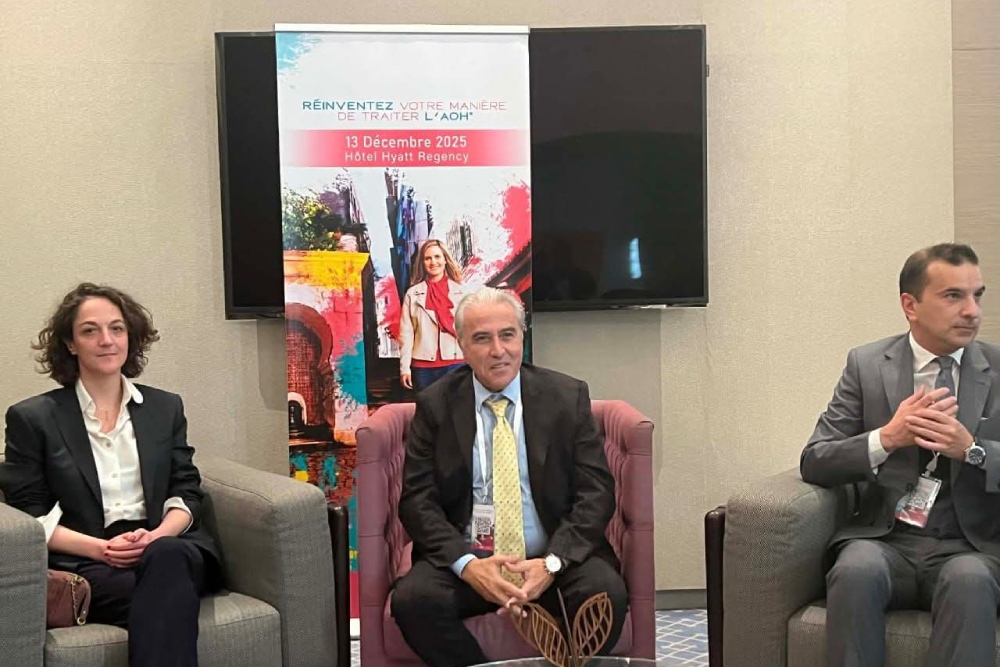
Professor Kamal Jannohat, Head of the Immunology Department at Rouiba Hospital and President of the Algerian Immunology Society, announced that hereditary angioedema is one of the rare and serious genetic diseases that threatens the lives of those affected by it, as between 260 and 300 patients currently suffer from it in Algeria. He pointed out that this disease remained for a long time insufficiently diagnosed, as it was confused with simple allergies, but today it has become the subject of increasing interest by health authorities, especially with expectations that specific treatments will soon be introduced to improve patient care.
During an awareness meeting organized last Saturday in Algiers under the title “The Impact of Hereditary Angioedema on the Quality of Life of Patients in Algeria,” Janouhat explained that this disease, which currently affects between 260 and 300 people in Algeria, has a genetic origin and is characterized by unexpected bouts of swelling that affect the skin and mucous membranes, and may sometimes extend to the respiratory or digestive system. This meeting was organized at the initiative of the Takeda Laboratory, which is represented in Algeria by the Clinica Group. In the presence of national and international experts.
Janouhat pointed out that the number of infected patients in Algeria is estimated at between 260 and 300 cases, with 24 deaths recorded, stressing that these numbers likely remain an underestimate, due to the delay in diagnosis and lack of knowledge about the disease.
One of the important points that was discussed during this meeting was the development of the therapeutic framework in Algeria. According to Professor Jannohat, the Ministry of Health officially recognized this disease by including it in the list of 128 recognized rare diseases, which opens the way for better organization of the treatment course and the introduction of specific medicines to treat and prevent seizures.
He stated, “Efforts are underway to ensure the availability of these treatments as soon as possible,” considering that providing them will contribute to significantly reducing the risk of seizures, repeated hospitalizations, and vital risks, especially those related to respiratory infection.
The specialist stressed that access to treatments cannot be fully effective without early and accurate diagnosis. The main problem, he explained, lies in the similarity of symptoms to allergic diseases. Due to lack of knowledge, some doctors prescribe anti-allergy treatments that prove ineffective, and he lamented: “Many patients continue to confuse swellings with simple allergic reactions, which leads to delays in care that can have serious consequences.”
According to Professor Janouhat, this rare disease, which currently affects between 260 and 300 patients in Algeria, is characterized by the appearance of recurrent swelling that affects the subcutaneous tissue and the deep layers of the skin and mucous membranes. Seizures can affect the face and extremities, as well as the digestive system, causing severe abdominal pain, vomiting, and severe diarrhea. In some cases, a large accumulation of fluid in the abdomen may lead to a sudden drop in blood pressure leading to shock.
He also warned of one of the most serious complications, which is infection of the upper respiratory tract. Swelling at the level of the throat or larynx may cause severe respiratory obstruction, which exposes the patient to the risk of suffocation, which may lead to death. The swelling can also be located at the level of the digestive system, sometimes causing a real surgical emergency.
In addition to the physical manifestations, hereditary angioedema is accompanied by general symptoms such as chronic fatigue and a non-itchy rash, in addition to psychological disorders, especially anxiety, depression, and nervousness.
According to the specialist, the disease deeply affects the social life of patients, who live under constant pressure. Study, work, marriage, and even reproductive projects become a source of concern, due to the fear of transmitting the disease to children.
He added, “It is necessary to raise awareness of the medical system about this rare disease,” praising in this regard the efforts of the National Association for Patients with Hereditary Angioedema, which struggles to recognize the disease and improve care for those affected.
Therefore, the continuous training of doctors, especially in general medicine, emergency medicine and pediatrics, is an essential focus to quickly identify patients and direct them towards specialized care.
For her part, Dr. Delphine Gobert from the Saint Antoine Hospital Center in Paris highlighted that follow-up tools constitute an essential pillar in the management of hereditary angioedema, but must be based on an in-depth scientific understanding.
She pointed to the progress made in the field of genetic diseases, especially monogenic diseases, which opens promising horizons in the field of innovative treatments, and even modifying the development of the disease. But she noted that the very high cost of gene therapies, which may reach two or three million dollars, remains a major obstacle to access in many countries.
Despite these limitations, the specialist stressed the importance of not marginalizing patients with rare diseases, stressing that only continuous research, supported by solidarity health policies, can guarantee fair and sustainable care.
#patients #hereditary #angioedema #Algeria
#oussama_boulegheb #elhiwardz #alakhibariat.xyz #elhiwar #elhiwar-en